What Is VP-CST? MPI Chief Program Officer Domonique McCord Explains
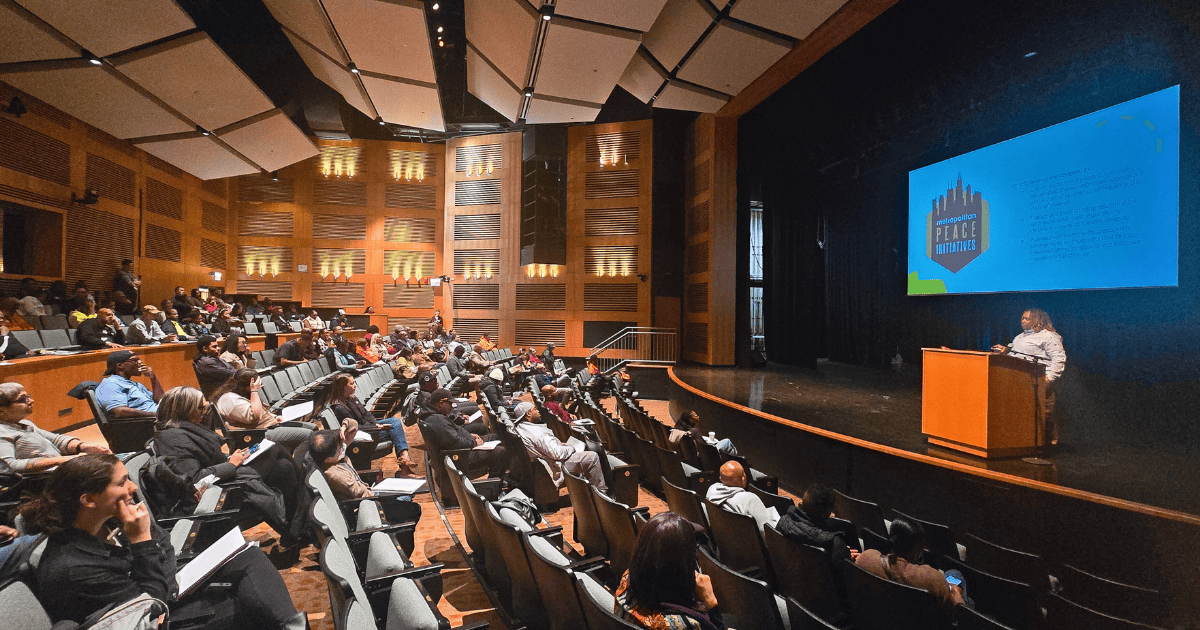
As the field of Community Violence Intervention (CVI) continues to grow and evolve, so do the needs and services of those it aims to help heal. Recently, Metropolitan Peace Initiatives (MPI) Chief Program Officer Domonique McCord presented at the Government Alliance for Safe Communities (GASC) CVI Community of Practice Convening, detailing the implementation of the Violence Prevention – Community Support Team, or VP-CST.
This support, added to Community-based Behavioral Health Services in 2022 and implemented at MPI in 2023, is intended to reduce traumatic stress symptoms and increase functioning for individuals who have experienced chronic exposure to gun violence. Like many services within CVI, the interventions and techniques provided by VP-CST are designed to be evidence-based, hyperlocal, trauma-informed, and culturally responsive.
McCord noted that while these services have always been provided under the CVI behavioral health model, they are now billable through Medicaid after assessments and diagnoses.
“This is not foreign to what we do in our communities every day,” McCord said, addressing the many outreach workers, case managers, and behavioral health specialists in the room. “As credible messengers, the individuals of the team engage and build trusting relationships with individuals most impacted by chronic exposure to gun violence.”
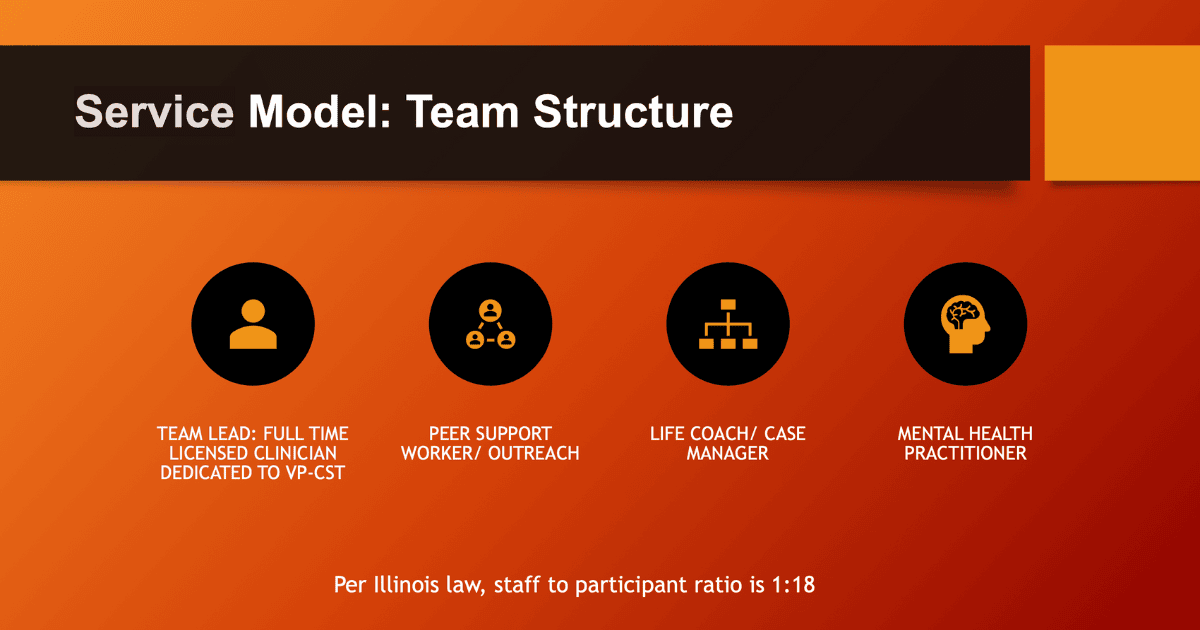
In helping these individuals, they are provided a roster of professionals which includes a team lead (a Master’s level, licensed clinician who typically serves as the therapist), a peer support worker or outreach worker, a life coach or case manager, and a mental health practitioner who is sometimes, but not always, the team lead.
Together, they utilize interventions and supports such as motivational interviewing, trauma-informed care, harm reduction, grief counseling, cognitive behavioral strategies, and more. As a participant becomes ready, they can also be connected to employment support, job readiness training, educational pathways, financial literacy, anger and conflict management, and other services.
“It is a partnership. VP-CST allows the team to come together in a more unified way to move the participant toward self-sufficiency,” McCord said.
Several Communities Partnering 4 Peace (CP4P) and Back to Our Future 2.0 (through MPI’s Youth Interventions initiative) organizations are currently in various stages of the VP-CST implementation process. They include Breakthrough Urban Ministries, Institute for Nonviolence Chicago (INVC), New Life Centers, Public Equity, Southwest Organizing Project (SWOP), Think Outside Da Block, and UCAN.
MPI provides technical support to these organizations by ensuring compliance, providing feedback and guidance to leadership on how and when to review data, improving processes, staying informed on any crisis situations, and more. Weekly and bi-weekly meetings are held to discuss operational and programmatic challenges and questions.
As VP-CST scales to include additional partner organizations, McCord said she recognizes that there is room for growth in order to maintain fidelity and quality in the model.
“While we are trying to support these organizations, hyperlocal work is really important to us. Creating an individualized plan, meeting, and tailoring is absolutely necessary,” she said.
As for early successes, McCord quoted a reflection from the team at INVC, stating, “Our two existing VP-CST teams are fully operational, actively engaging participants, and demonstrating strong collaboration between outreach, case management, and clinicians, which is resulting in consistent engagement, improved continuity of care, and strengthened relationships within the community.”