[WATCH] Healing the Healers: Wellness in Community Violence Intervention
Public Equity, an organization dedicated to improving safety and the overall quality of life for residents in Englewood and West Englewood, launched its Integrative Wellness Program which aims to empower its staff and reinforce their overall well-being by incorporating evidence-based medical and therapeutic practices.
Metropolitan Peace Initiatives followed the group during their initial kickoff session. Below, read about their journey.
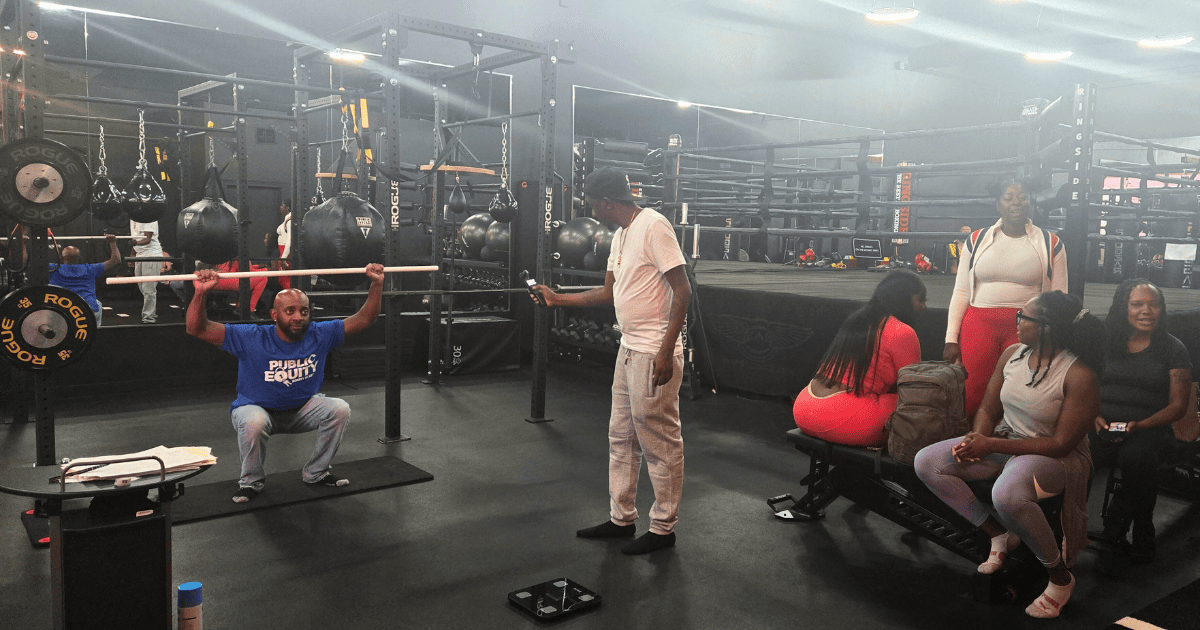
It’s an unseasonably warm Monday afternoon in late September 2025 as a small group of Community Violence Intervention (CVI) professionals meet at Elite Athletes Performance, a Black-owned gym tucked away in Chicago’s Hyde Park neighborhood. Eager to begin a six-month wellness journey, these 12 individuals represent Public Equity, an organization dedicated to improving safety and the overall quality of life for residents in Englewood and West Englewood.
It’s evident that the group is locked in. This initial meeting at Elite will assess their physical capabilities, which they’ll compare at the program’s end in March 2026. While moving through introductions, they share personal fitness goals that seem straightforward on the surface. However, said goals will require a certain level of effort and persistence.
Some people want to lose a few pounds. Others want to get back to a consistent workout routine. One person wants to improve their upper body strength, just enough to complete ten pull-ups.
But more than transforming the physical, Public Equity’s Integrative Wellness Program aims to empower its staff and reinforce their overall well-being by incorporating evidence-based medical and therapeutic practices. With focused attention and a dedicated network of medical professionals, fitness coaches, and nutritional experts, the participants will have their progress tracked as they move toward their goals.
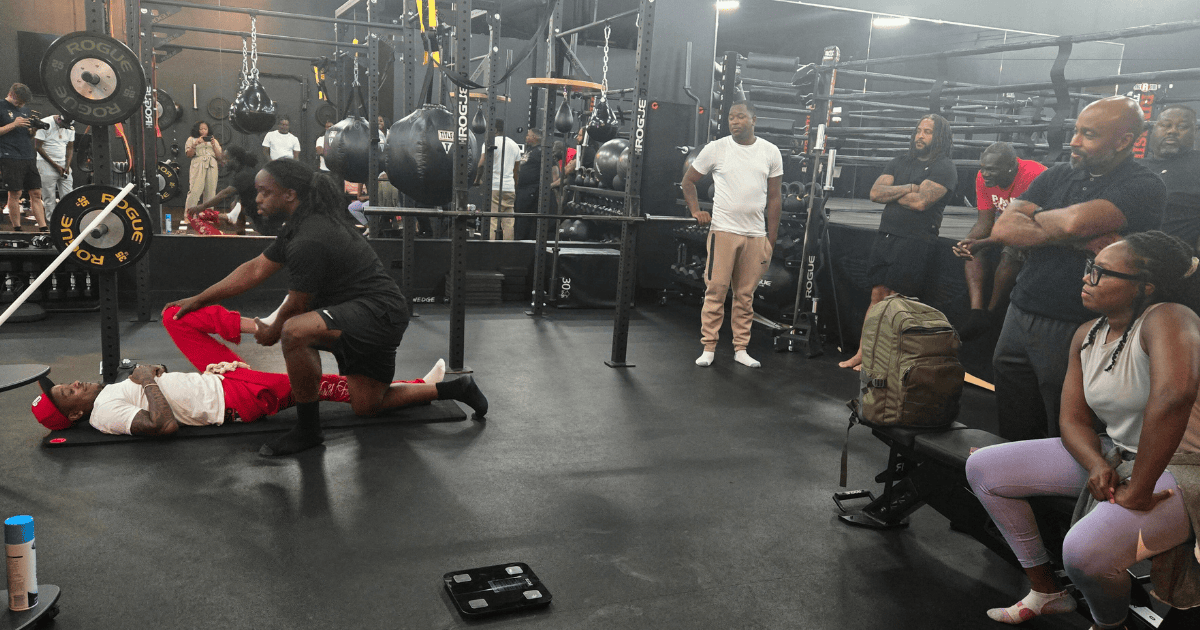
No one in the group is forced to be here; they’ve all vowed to adopt a healthier lifestyle that will balance out the demanding work of CVI.
“In this work, we’re tasked with going out into the community and working with others, helping them figure out their problems. But, it’s okay to prioritize your own personal goals and wellness,” says Tony Woods, Founding Director of Public Equity. “We like to have our capes on, and we’re just running blindly into the community, trying to fix everybody else’s issues. We have to improve our own lives first.”
Public Equity, one of 15 organizations representing Communities Partnering 4 Peace (convened by Metropolitan Peace Initiatives), makes it its mission to normalize a more holistic lifestyle among its staff. Day in and day out, CVI workers are on the front lines of stressful, volatile, and sometimes traumatic situations that can take a toll on their overall well-being. For this work to be sustained, Woods says, wellness must come first.
Ciara Stanton, the organization’s co-founder and Associate Director, adds, “We believe that healthy individuals nurture healthy communities. By prioritizing the wellness of our team, we are investing in community safety, which strengthens community resilience and collective impact.”
“For us, staff wellness programs are not a luxury—they are a necessary investment in violence prevention.”
For Korey Rutledge, a Hospital Responder at Public Equity, he says he hopes this opportunity gets him back on track to a healthier lifestyle. He explains that while he’s been on a fitness journey for the last ten years, the demands of work and fatherhood have made it difficult to find time to prioritize his well-being.
“I want to be able to focus more, to be at peace and one with myself,” Rutledge says. “I just want to be able to focus more on my workouts, get back to where I was, and grow.”
Of course, with physical, emotional, and mental wellness being interconnected, the group’s day doesn’t end at the gym. They head across town to the Greater Auburn Gresham Development Corporation’s Healthy Lifestyle Hub to complete assessments that will be reviewed and tracked by a team of clinical professionals over the next several months. This baseline wellness questionnaire asks participants to gauge their current moods, energy levels, safety, support, and immediate needs.
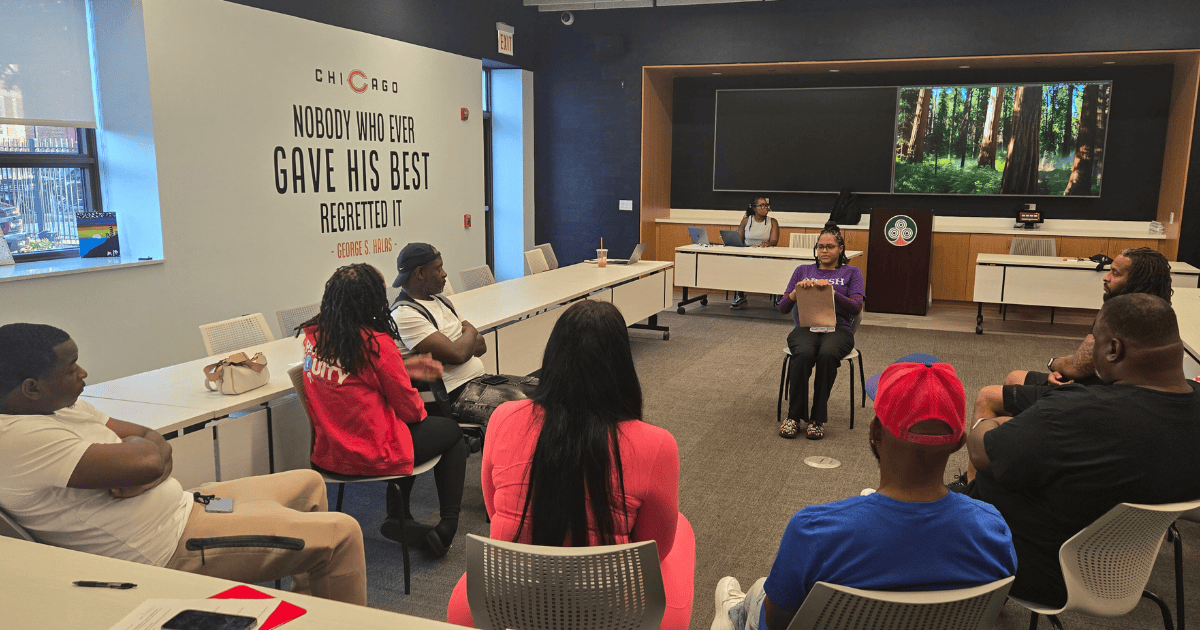
Upon receiving lab results, the clinicians will conduct bi-monthly interdisciplinary meetings to evaluate progress, review care plans, and make any adjustments to personal goals.
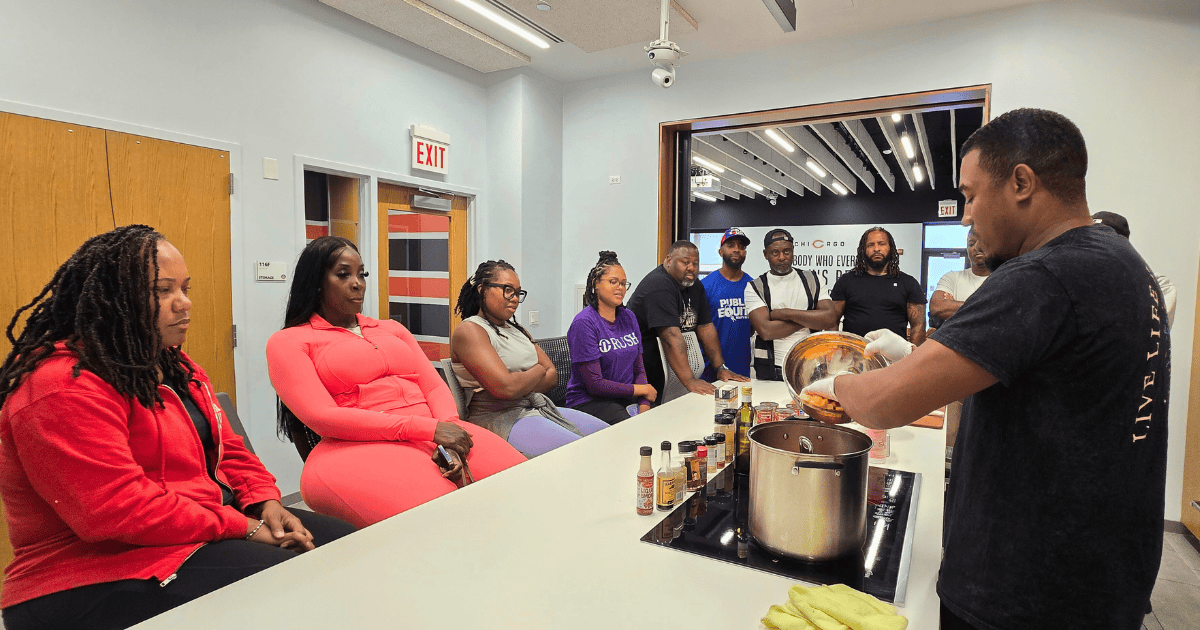
Later, the group sits for a cooking demonstration and tasting led by Patrick “Chef Prep” Tyler II, who encourages individuals to make healthier food choices without sacrificing flavor. He whips up a hearty pot of vegetarian sweet potato chili, which is met with a bit of skepticism from the group. (Sweet potatoes? In chili?) Tyler speaks to the group about healthy ingredient swaps, easy cooking hacks, and ways to make being in the kitchen more enjoyable.
Once served, a hush falls over the room. Smiling faces nod in approval. And soon, the pot and bowls are empty. The chili is a hit.
“Cooking healthy foods as part of your healing process empowers you to take some control of your life,” Tyler says. “When you’re of service to a bunch of people, you have to be physically, mentally, and emotionally stable. A proper diet—a healthy, nutrient-dense diet—allows you to have stabilized energy and emotional moods. You have the brain power to not only think for yourself, but for others.”
As the day wraps up and folks head home, it remains to be seen where the group will land by the end of the program. However, the positive energy, determination, and encouragement from this initial session leads one to believe that the initiative will be a success. And the ripple effects of their efforts will touch the individuals and communities they’ve set out to serve.
“By supporting our staff in taking control of their healing journeys, we are helping lay the groundwork for a sustainable workforce,” Woods says.
“Centering brain health and emotional well-being isn’t just beneficial, it’s essential for fostering the long-term capacity that front-line staff need to continue their work in CVI.”
It’s June 2026, three months since the group completed Public Equity’s first cohort of the Integrative Wellness Program. Rutledge, who started the program to re-focus on his well-being and that of his family, reflects on his journey. He says the demands of work and life continue to roll in, but the program helped him better manage all that comes his way, for better or for worse.
During the program, Rutledge and his team dealt with the devastating loss of a co-worker; Rutledge says he took the death especially hard since the two had been close. While there’s no erasing the pain of such a traumatic event, Rutledge says the holistic teachings of the program helped him better navigate the situation.
“It really tore me up and prevented me from doing the work because he and I had a real relationship, but going through the wellness program helped me to re-focus and re-center myself,” Rutledge says. “I focused on what we learned and started to take my wellness more seriously. At any time, something could happen around you, and you have to be prepared for it.”
“My biggest lesson was to invest in me. Self-care is mandatory. You have to have a self-care routine when you’re doing this work. If you don’t, you’ll burn out very fast.”
Rutledge says he’s taken all that he’s learned about mental health, nutrition, and fitness and is not only implementing it in his life but also passing it along to his 15-year-old son. He’s ensuring that the next generation has the tools they need to not just survive, but thrive. He hopes other CVI organizations adopt similar programs to support their employees.
“There are too many people out here bleeding on the participants and not doing the work properly,” Rutledge says. “If you want to get the work done right, you have to address the root issue. You can’t be in the field bleeding on people if you’re trying to help them fix themselves.”