‘This Work Is Personal’: CVI Leaders Testify Before Illinois General Assembly, Push for Sustained Funding

In the wake of the Trump administration’s decision to cancel public safety grants, several Community Violence Intervention (CVI) leaders from across Chicago and the state testified before the Illinois General Assembly, calling for sustained funding as they continue in the fight to reduce gun violence. This comes at a critical time when Chicago is experiencing a steady decline in violent crime, one of its lowest levels in 60 years.
The testimony took place on Wednesday, October 29, 2025 in Springfield and virtually, as violence prevention leaders, researchers, health experts, public officials, and others spoke to the effectiveness of CVI programming, while also addressing funding limitations. Metropolitan Peace Initiatives (MPI) Executive Director Vaughn Bryant was among those who championed the work but voiced concerns over recent grant cuts.
“Over the past year, the Department of Justice abruptly terminated two Community Violence Intervention and Prevention Initiative grants and we lost $3.7 million. Also, ARPA [American Rescue Plan Act] funds—federal pandemic relief dollars— have started to phase out,” Bryant said. “These funds allowed us to grow, innovate, and respond quickly to urgent needs. Without a long-term replacement, we face a looming gap that threatens to reduce services, cut staff, and undermine the stability we’ve built.”
In April, the Trump administration slashed more than $800 million in grants that supported CVI programs nationwide. The Department of Justice reasoned that the funding no longer “aligned” with its priorities, forcing nonprofit organizations across the country to make staff cuts and worry about an uncertain future.
Bryant urged the state to maintain its investment in CVI, specifically the nearly $7 million in funding for street outreach and case management through the Illinois Criminal Justice Information Authority, or ICJIA.
“Our biggest limitation today is the uncertainty of long-term, stable funding. The work of violence intervention is not short term. Yet too often, our funding is,” Bryant said. “That instability makes it difficult to hire, retain, and train the outreach workers and case managers who are at the heart of this work.”
Christa Hamilton, President and CEO of UCAN and a proud South Sider, spoke to the issues and success stories she’s experienced while leading her organization. UCAN is one of 15 organizations representing Communities Partnering 4 Peace (CP4P), which is convened by MPI. The coalition of community-based organizations serving 28 Chicago neighborhoods aims to reduce gun violence by providing street outreach, case management, victim services, Light in the Night events, and more.
“I have lived through many of the realities that make people feel unsafe in Chicago, so I understand it. Like so many other Chicagoans, I have lost loved ones to gun violence. I’ve had my car stolen. I’ve had to duck for cover from bullets at both my home and my job, and that is like so many of our violence prevention workers,” Hamilton shared.
“[…] We carry those experiences to our jobs every single day, so we understand and we are more motivated than anyone you can imagine, that we live and work in communities that have to face those realities.”
Still, Hamilton said, there’s nuance in those realities. UCAN has been able to bring peace and opportunities to the North Lawndale community through funding that supports CVI.
“Despite the headlines, I know that my team is working very hard to create peace treaties. We have thousands of unbroken peace treaties across both the South and the West Side of Chicago,” she said. “We’ve helped hundreds of young people find meaningful jobs. We’ve completed thousands of outreach, business, and hospital visits. And, we’ve stood in courtrooms to help both perpetrators and victims find a reason to live and hope again.”
With programs like REACH 21, SheRo, and more, Hamilton said these initiatives have aided in the decline of gun violence in North Lawndale. Gun violence is down 40% in the area.
More broadly, across the city, homicide victimizations are down nearly 30%, according to Chicago’s Violence Reduction Dashboard.
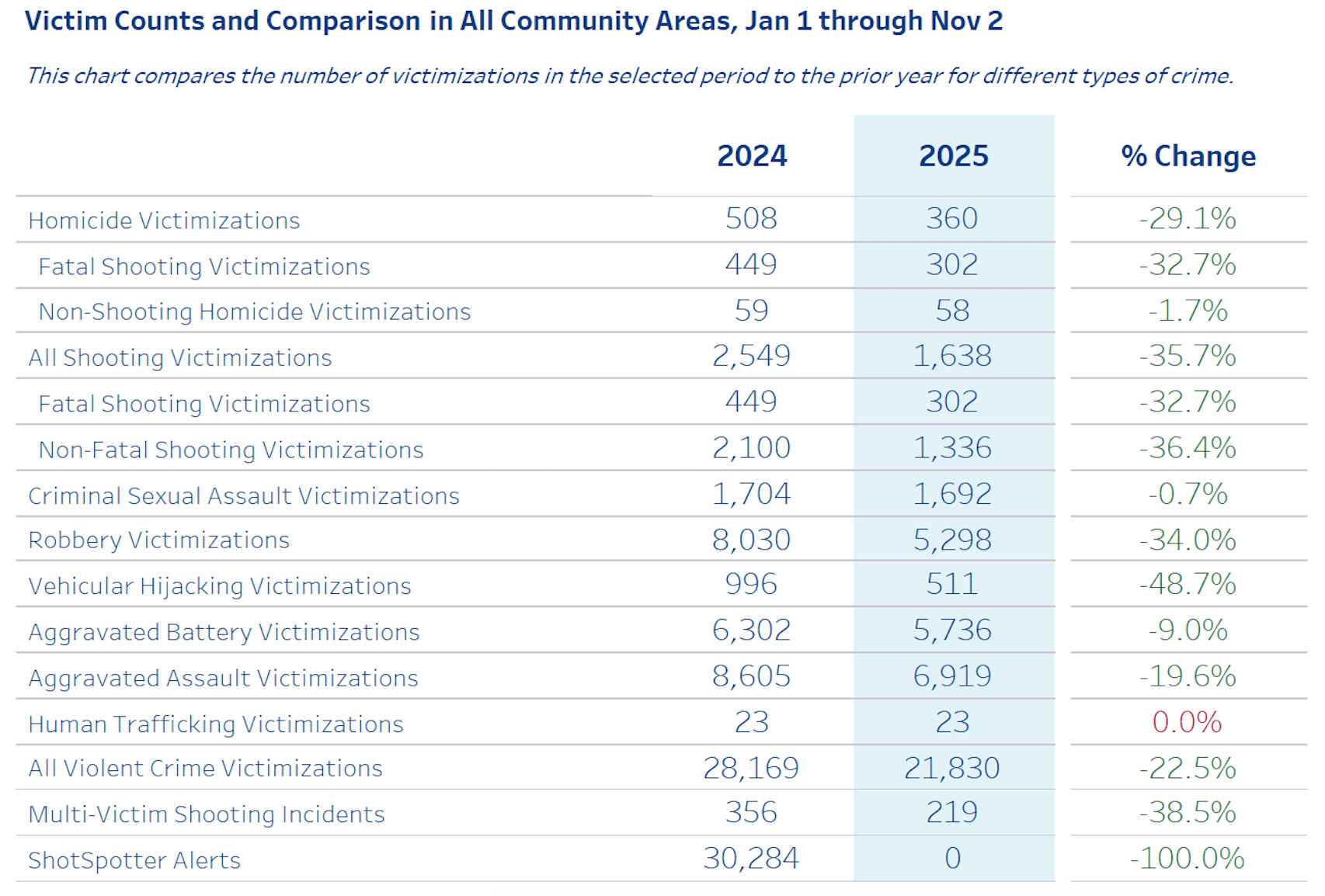
For CP4P’s part, Northwestern University’s Center for Neighborhood Engaged Research and Science (CORNERS) found that the coalition prevented at least 383 homicides and shootings across Chicago between 2017 and 2021. Additionally, Peacekeeper hotspots experienced a 41 % overall reduction in victimizations from 2023 to 2024.
While the work of CVI has progressed in Chicago, there is still much to be done. Institute for Nonviolence Chicago Founder Teny Gross said this fight for change continues, as he pushes for police reform, CVI infrastructure, neighborhood infrastructure, and prevention and development for youth.
“Just so you know, no one is celebrating here. […] Every homicide for us is a personal failure,” Gross said. “There was someone that I helped to get a car [who] was trying to get out of the streets in December, and he was killed live on Facebook a few months ago. We had an outreach worker whose son was killed two months ago. Those are very personal to us. This work is personal.”
With plans to further expand the work of CVI across Chicago, Gross said he and his colleagues have faced challenges due to funding cuts. At INVC, he was forced to lay off a portion of his staff earlier this year, which led to fewer participants being served.
Succinctly summing up his testimony, Gross said disinvestment in CVI is not the answer. “You will never reduce the violence in Chicago without CVI.”