Tashee Poplous’ Message of Empowerment Stretches from ‘State to the Lake’

Metropolitan Peace Initiatives is proud to celebrate the lives and work of women in Community Violence Intervention (CVI). Read more stories here.
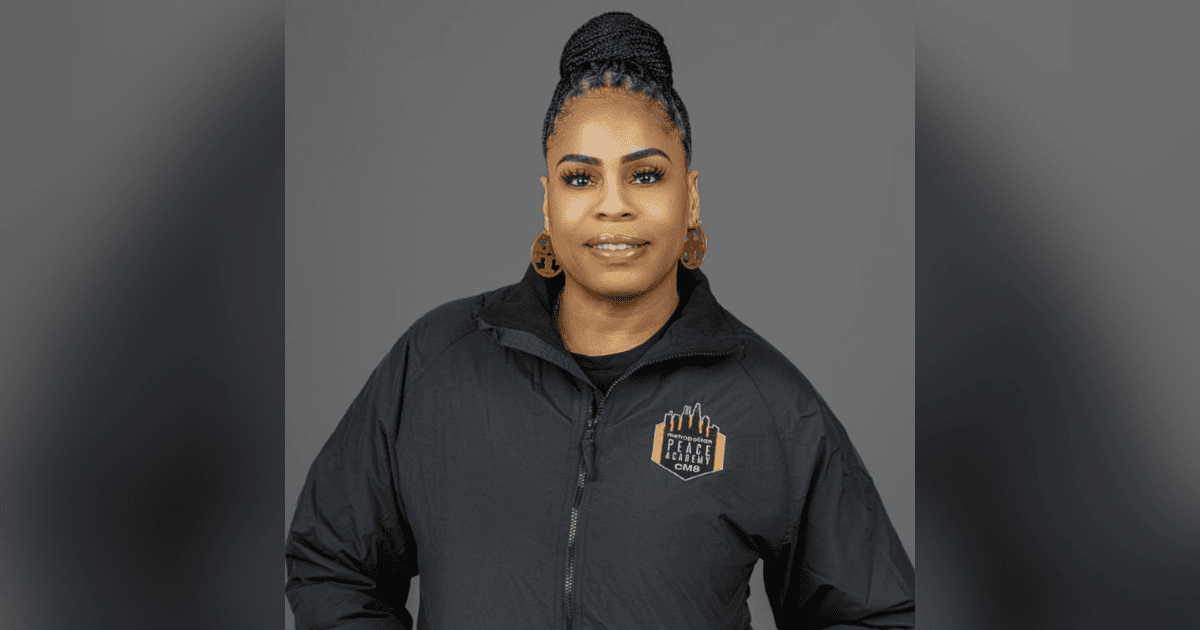
As a Training Specialist at the Metropolitan Peace Academy (MPA), Tashee Poplous is part of a team of experts in the fields of Victim Advocacy, Street Outreach, and Case Management who prepare hundreds of professionals every year in Community Violence Intervention (CVI) practices and standards. Poplous has a strong presence in class: assertive, diligent, and nurturing.
“Empowering others is my thing,” says Poplous about her role as a mentor for CVI professionals. “Especially for young women, I want them to be better than I was. I want them to succeed, even maybe a little bit more because their odds are stacked against them.”
Poplous calls herself “Miss State to the Lake,” born and raised in several different parts of Chicago — the projects at Stateway Gardens, the Robert Taylor Homes, among other areas. Growing up the daughter of two preachers, she says she was at church “morning, noon, and night.” Through church, Poplous was exposed to a great deal of funerals and grieving families, which sparked an early curiosity about the afterlife and the emotional impact of death. Eventually, this curiosity became her first calling: mortuary science, which she studied and graduated from Malcolm X College in 2012.
Poplous says her time in mortuary science was sobering, as she reflected on the many individuals, particularly children, she saw come through the morgue.
“I’ve seen a lot of things you couldn’t imagine,” she says. “I didn’t like that part. I also had a lot of friends and family that were passing away.” Coming face-to-face with the realities of gun violence, Poplous began to ask herself what she could do to make a difference.
Poplous admits to having a tough exterior, but says inside she’s a much more caring and loving person. This softer side called her to minister in her own way to the deceased and their loved ones.
However, she wasn’t exactly sure where she fit in the process.
She was introduced to the Institute for Nonviolence Chicago (INVC) and CVI in 2019, which opened her up to a new world of possibilities.
“It was right on time,” Poplous says. “[I felt] this is what I always wanted to do, to assist the loved ones of individuals who have been wounded and traumatized.”
“[I felt] this is what I always wanted to do, to assist the loved ones of individuals who have been wounded and traumatized.”
Poplous started her CVI career as a victim advocate, an individual who assists the victims of violence and their families in obtaining critical resources, including emotional support, funeral support, and victim compensation.
Of her early days in the field, she says, “I was shaking in my boots. I was like, ‘I don’t know what I’m going to say to these people.’”
But getting out in the field, especially in familiar neighborhoods, she says victim advocacy became like second nature. “I took it and ran with it. [Because] guess what? When I was in the funeral homes, that’s exactly what I was doing, talking to individuals that lost their families.”
As a mortician and victim advocate, she especially learned how to avoid re-traumatization after losing a loved one to violence.
“[I know] how to talk to them, be compassionate, show them love not just in the moment, but when no one else is there,” she says. “When the funeral is done, people normally just stray away, but when everybody is gone, you still need someone. And I was that person that still stayed there.”
“When the funeral is done, people normally just stray away, but when everybody is gone, you still need someone. And I was that person that still stayed there.”
Poplous transitioned to a role as a supervisor and then Associate Director of Violence Prevention at Breakthrough Urban Ministries before coming to Metropolitan Peace Initiatives (MPI) as a Training Specialist at the MPA, Chicago’s training grounds for CVI specialists.
“I wouldn’t say I’m a teacher. I’m more of a facilitator,” she explains. “And the reason I say that is because I have the class engage with me. There’s no right or wrong; [I say] let’s learn this together. To me, it’s more of a family.”
In her role, Poplous uses everything in her background at her disposal. “Both of [my parents] have given me ways to basically talk to individuals not only right here physically, but spiritually as well.”
Much of the MPA curriculum is focused on the mental health and wellness of the CVI professionals themselves, given the high-intensity nature of the field. As a Training Specialist, Poplous says she takes extra time to nurture the women in the program, but also feels she helps the men access more vulnerability.
“They don’t think they should be vulnerable, because the world has been beating down on them,” Poplous says. She aims to make her class a safe space, allowing the students to process their own experiences.
Poplous says more needs to be done to support the needs of women in the CVI field, but first, we need to figure out what they really need.
“If we don’t know, how do we support them?” she says. “We do a good job of hiding things because we don’t think we have the support. I was one of them. So women need to do a better job of speaking up.”
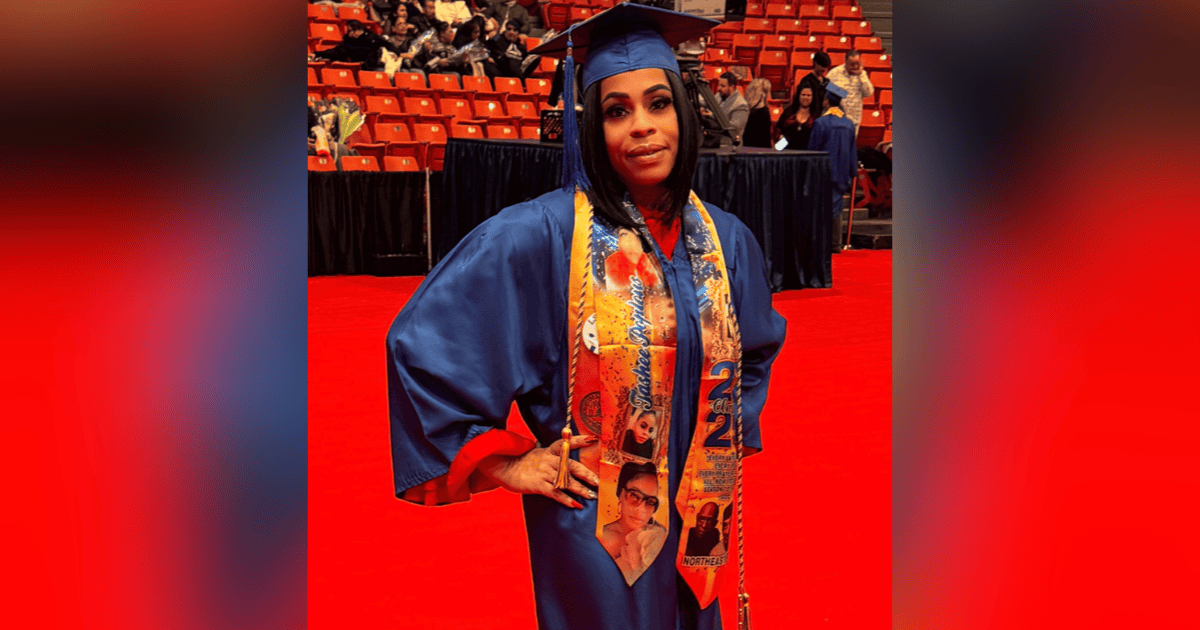
While Poplous continues her work training victim advocates to support Chicago’s most vulnerable neighborhoods, she continues to develop her own skills and expertise, recently earning her Bachelor’s degree in social services with a minor in community development. She says, “This degree supports my work in violence prevention and intervention by helping me engage hyper-locally, build trust within the community, de-escalate conflict, and contribute to safety, healing, and sustainable change where it is needed most.”
To Poplous, the most rewarding part of her job is seeing people achieve when they thought they couldn’t.
“[Some people] are so standoffish at first. I had a young lady tell me, ‘I don’t know if I can get through this.’ And I looked at her and said, ‘But you will,’” Poplous says.
“The most rewarding part is when they can get up there at graduation and they have tears in their eyes. And they say, ‘You told me I could make it when I didn’t even believe in myself.’”
Read more Women in CVI stories here.