PSPC & City Club Chicago Explore How Investment and Collaboration Are Helping Shape Safer Communities
What does it take to create safer communities? According to leaders from Chicago’s philanthropic and civic communities, the answer starts with partnership.
That was the central theme of How Chicago Is Rewriting the Public Safety Playbook, a recent City Club Chicago discussion hosted on July 1 in collaboration with the Partnership for Safe and Peaceful Communities (PSPC). The event brought together leaders from across sectors to reflect on Chicago’s progress in reducing gun violence and explore what it will take to sustain the momentum in Community Violence Intervention (CVI) throughout the remainder of the year and future.
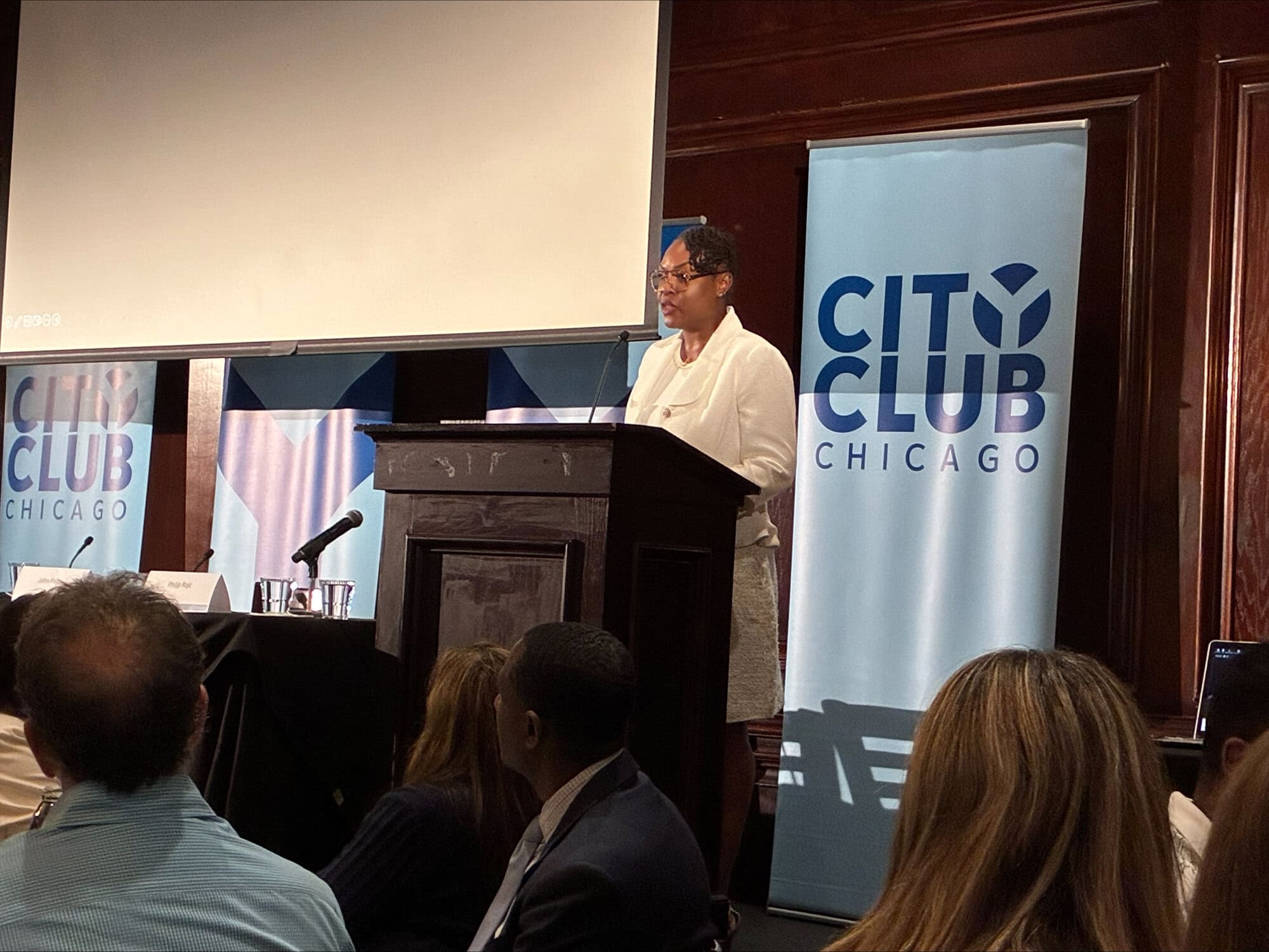
Esther Franco-Payne, Executive Director of PSPC, provided opening remarks acknowledging the coalition’s growth over the last decade. What began as a small group of philanthropic partners has grown into a network of more than 50 funders that have collectively invested more than $200 million in violence prevention efforts throughout Chicago.
“Public safety is not just the absence of harm,” said Franco-Payne. “It’s opportunity, belonging, dignity, and hope.”
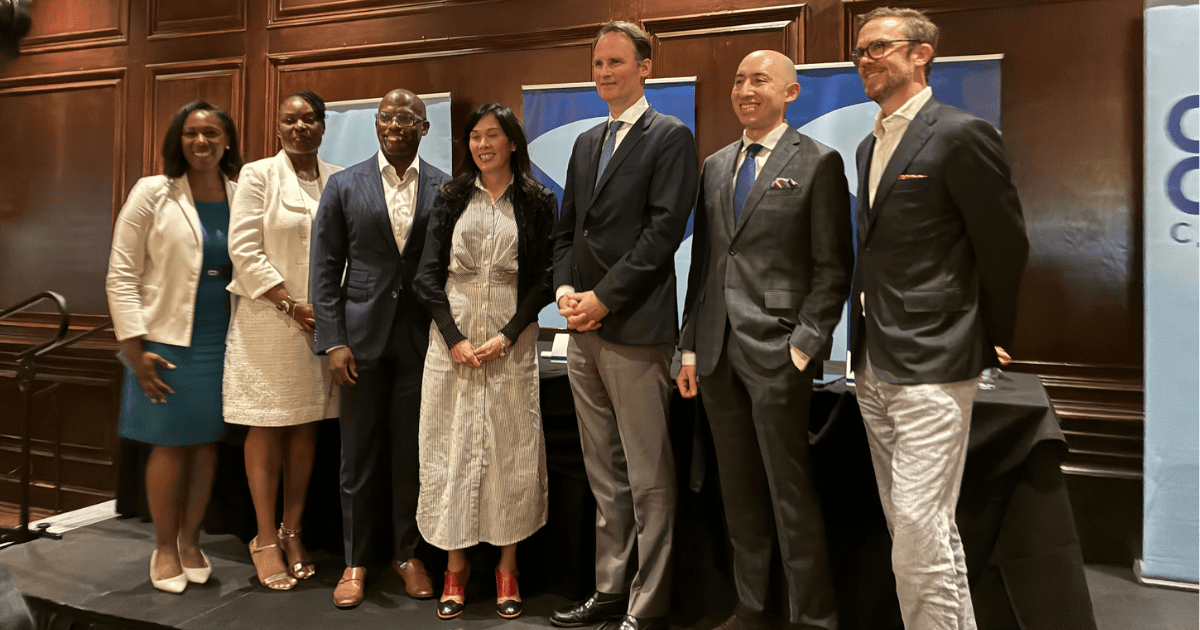
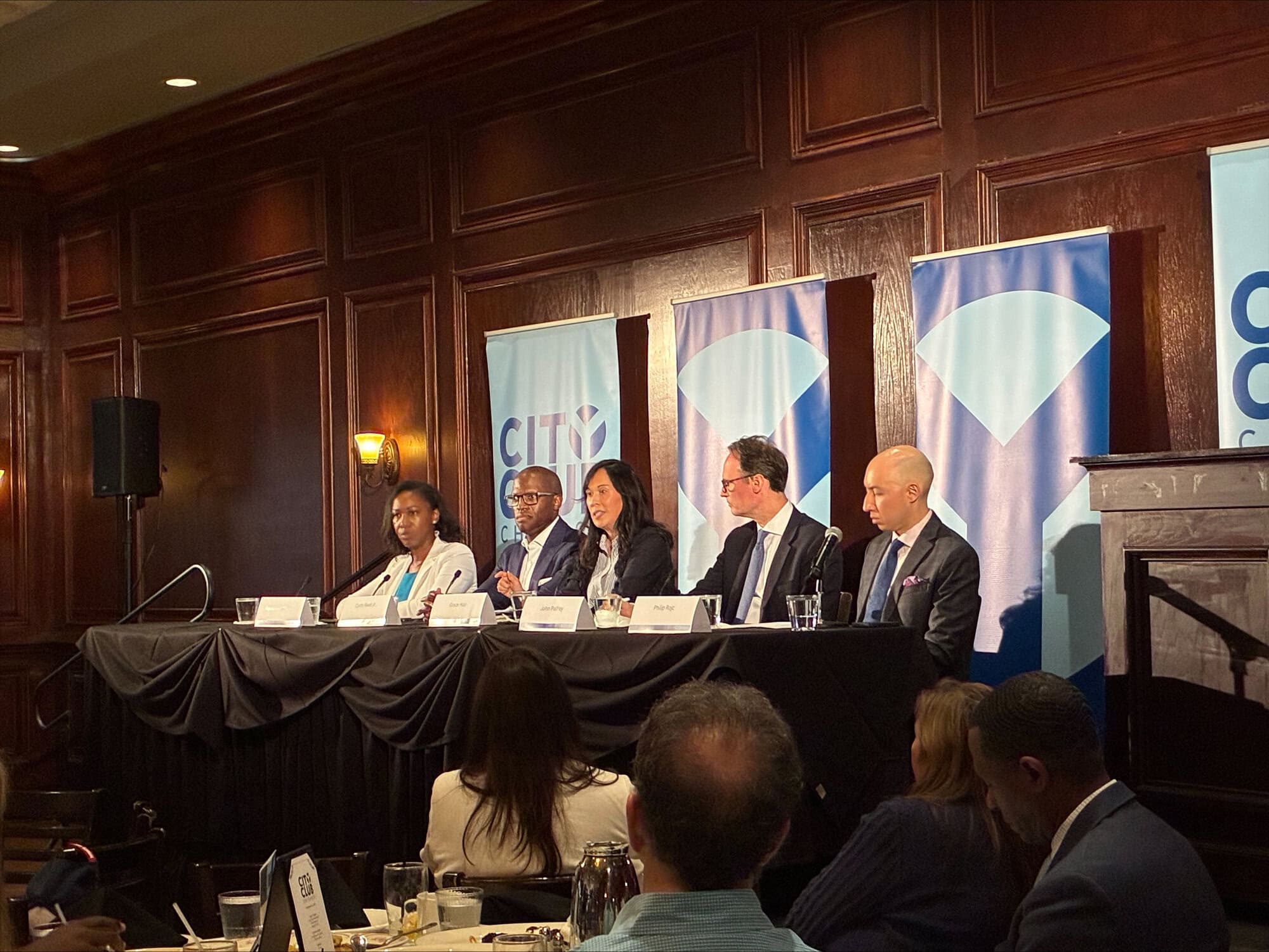
The discussion, moderated by Philip Rojc, senior editor for Inside Philanthropy, featured a panel of business and civic leaders, including:
- John Palfrey, President, MacArthur Foundation
- Grace Hou, Illinois Deputy Governor, Health and Human Services
- Curtis Reed, Head of Government and Healthcare, Higher Ed and Not-for-Profit Banking, JPMorgan Chase
- Fatimah Loren Dreier, Executive Director, Kaiser Permanente Center for Gun Violence Research and Education
Throughout the discussion, the panelists pointed to encouraging results in Chicago’s violence reduction strategies. In 2025, the city closed out the year with its lowest homicide total since 1965, a nearly 50 percent reduction in shootings compared to 2021.
While recent increases in violence in high-risk communities cannot be ignored, the city’s progress demonstrates what is possible when communities, CVI organizations, government agencies, and businesses align around a shared vision.
“Public safety cannot depend on any single strategy,” said Franco-Payne. “Effective policing remains important, but lasting safety also requires investments in CVI, youth development, economic opportunity, behavioral health services, education, and neighborhood revitalization.”
Chicago’s CVI community is emerging as a national leader in violence prevention as noted by Dreier who is based in New Jersey. Dreier described the city’s collaborative approach as a model for communities across the country, while Palfrey pointed to initiatives such as Scaling Community Violence Intervention for a Safer Chicago (SC2), which has demonstrated measurable reductions in violence through deeper investments and coordination in neighborhoods most impacted by gun violence.
“Evidence has shown a 59% decline in gun carrying behavior and a 75% reduction in violence exposure when we invested more (in CVI) and community groups coordinated around those resources,” said Palfrey.
The City Club luncheon served as an opportunity to strengthen CVI relationships across sectors. Metropolitan Peace Initiatives (MPI) staff and Communities Partnering 4 Peace (CP4P) partners joined attendees in conversations throughout the afternoon about the future of public safety in Chicago. These conversations helped reinforce the critical role that CVI professionals and community-based organizations continue to play in driving the outcomes discussed on stage and ensuring that community-informed solutions remain at the center of violence prevention efforts.
Perhaps the strongest takeaway from the discussion was that Chicago’s success story is still being written. As challenges evolve, speakers called for continued innovation, sustained investment, and stronger partnerships across sectors.
The conversation concluded with a message of optimism: Chicago has shown what is possible when organizations choose collaboration over competition. The work continues, but so does the opportunity to build safer, healthier, and more thriving communities for all Chicagoans.