MPI Hosts Second Chance Month Discussion on Incarceration and Restorative Justice
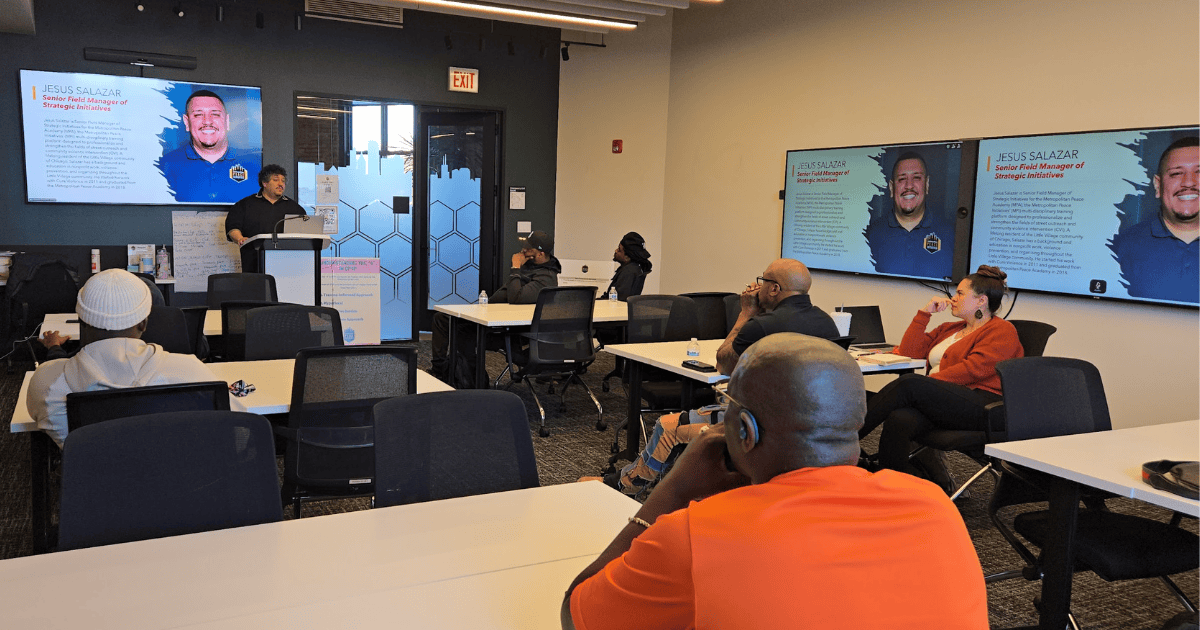
On Tuesday, April 28, staff at Metropolitan Peace Initiatives (MPI) held an informative discussion centered on the realities and opportunities individuals face after coming home from prison. The event, supported by Metropolitan Family Services’ (MFS) Racial Equity Inclusion Justice Initiative (REIJ), rounded out Second Chance Month and uplifted the voices of those who have been justice-impacted.
MPI Field Manager Charles Decuire and Policy Analyst A’Keisha Lee led the session, making note of the staggering incarceration rates within our country. According to the World Prison Brief, more than 11 million people are incarcerated worldwide, with the United States representing approximately 25% of the world’s prison population. This figure amounts to nearly 2 million people, or one in every five individuals.
“We’re not doing a good job as a country when it comes to who’s incarcerated,” Lee said. “[Looking at] our peers, like Germany and Switzerland, you see how small their numbers are. Countries that have a similar economy to ours are doing much better, saying there are alternatives to prison time. There are ways to curb harm that don’t mean going in a hole and being tortured there.”
The session was opened up for the group to candidly discuss issues around pre-trial detention, house arrest, social stigmas, and the challenges people face after coming home, such as finding employment and housing. These hurdles are no doubt compounded for Black and Brown people who disproportionately represent the United States’ prison population and who already face unjust discrimination.
In speaking on alternative routes to restorative justice, Decuire pointed to the fact that most offenders are nonviolent and have had their freedom taken away for low-level crimes. He suggested that the path to redemption come through non-punitive measures.
“People who’ve committed retail thefts, who have drug-related offenses, or who have committed small, petty crimes, [they’re] fill up our jails. These are nonviolent offenders,” Decuire said. “Why not get to the root, to the mental health piece or the substance abuse piece, which is driving the crimes that they commit?”
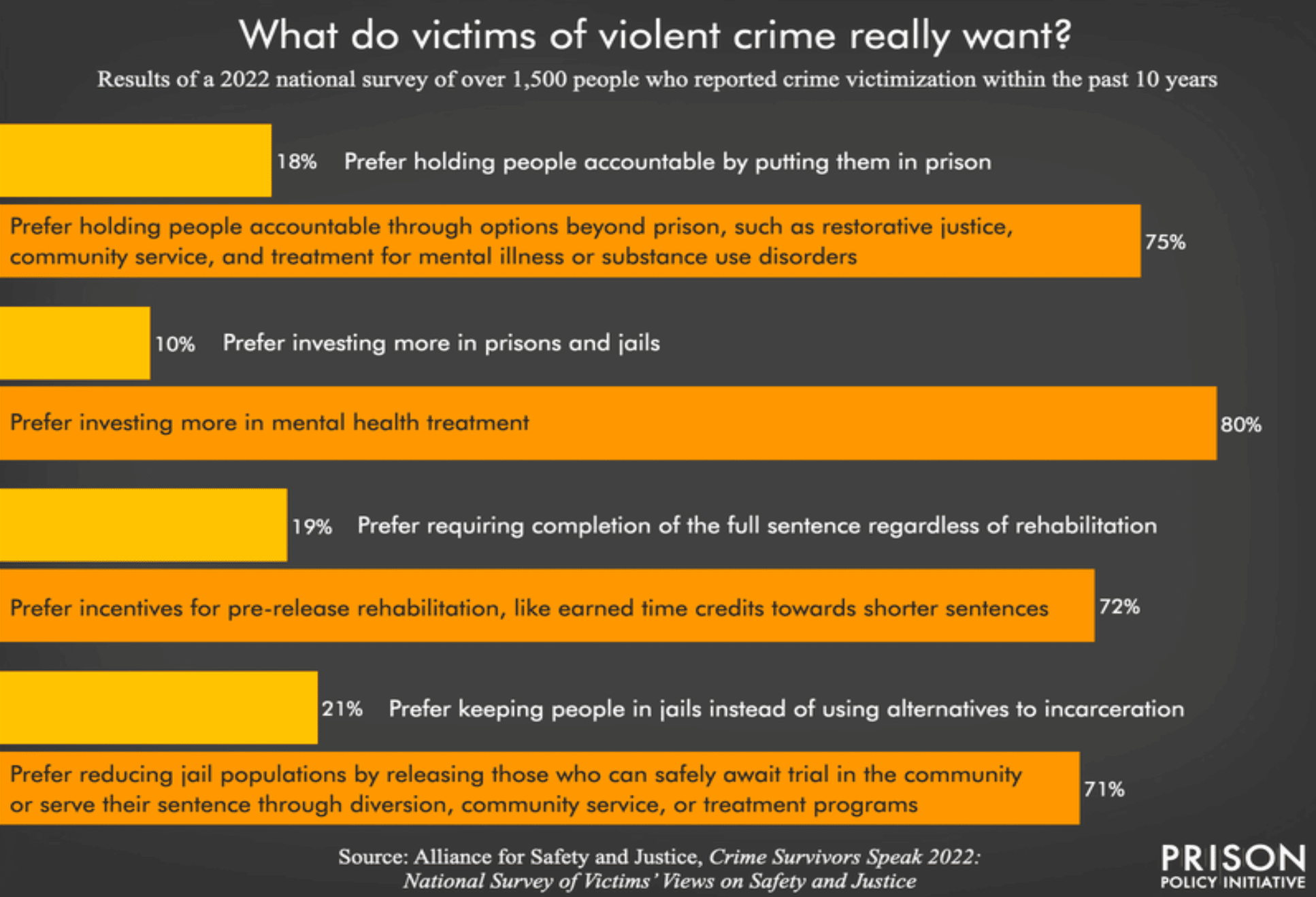
Even more, studies have found that victims of violent crimes overwhelmingly prefer that perpetrators get rehabilitated through restorative justice programs, mental health counseling, or community service, instead of facing prison time.
Decuire noted that organizations such as MFS are dedicated to providing second chances to justice-impacted individuals. In 2024 alone, more than 1,200 people were recruited into Illinois’ Peacekeepers Program, which employs those most at risk of shooting or being shot and tasks them with defusing hostile situations and monitoring hotspots around Chicago.
As a result, Northwestern University’s Center for Neighborhood Engaged Research and Science (CORNERS) found that communities served by the Peacekeepers Program experienced a 31% decline in gun violence in 2023 and 2024 compared to the previous two years. Additionally, hotspots saw a 41% decline in shootings.
Since then, more than 171 Peacekeepers have transitioned into full-time Community Violence Intervention (CVI) careers.
In addition to discussing legislation and recent State wins such as the end of cash bail and the passing of the Clean Slate Act, the session wrapped with personal stories from MPI Senior Field Manager of Strategic Initiatives Jesus Salazar and Field Managers Lamont Coakley and Jaron Washington, all of whom have experienced the challenges of reentering society after incarceration.
They stand as representations of what happens when individuals are properly poured into, instead of being dismissed or thrown away for past mistakes.
“Many people hear restorative justice and think that it’s just about peace circles or conflict resolution. But, restorative justice and REIJ as a whole is really about repairing what has been broken,” Salazar said. “It is about understanding harm, understanding people, and understanding the systems that help shape our lives. It is about creating spaces where people can be seen, heard, and supported — not just judged or written off.
“My story is an example of what happens when someone is given a chance, a relationship, and a path forward. It’s what happens when a community invests in healing instead of punishment alone. It’s what happens when people believe in transformation.”