
Lake County Peacemakers Join Metropolitan Peace Academy for Transformative Violence Intervention Training and Collaboration
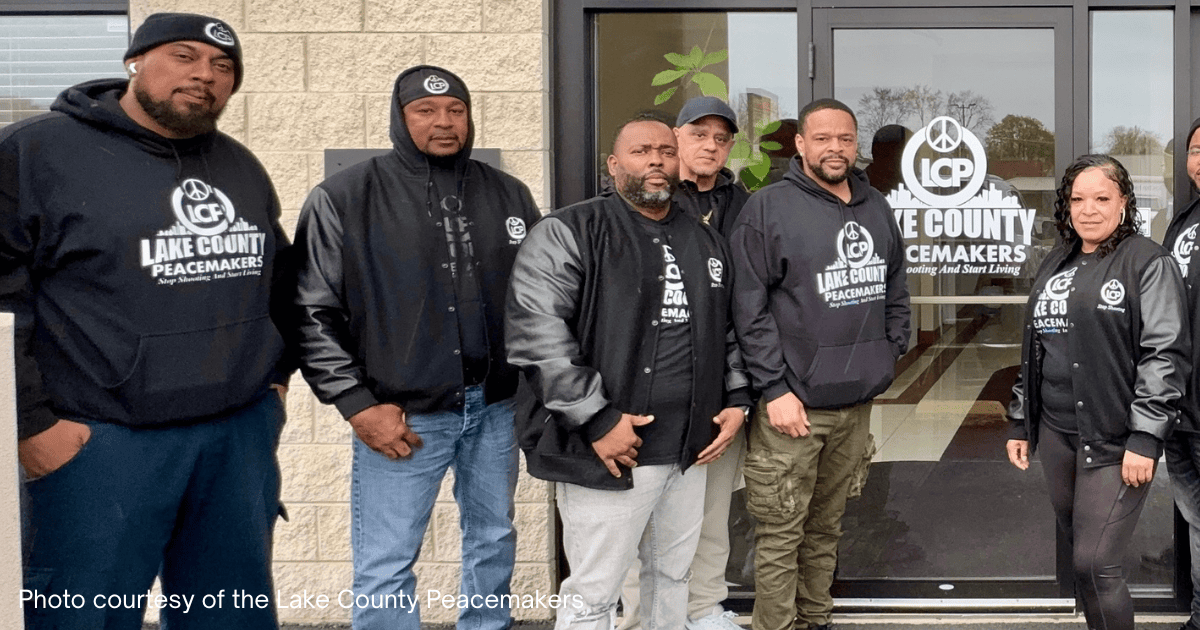
A recent collaboration with the Lake County Peacemakers has been underway at the Metropolitan Peace Academy (MPA), bringing county violence interrupters to the Pilsen training facility to share with and learn from Chicago’s Community Violence Intervention (CVI) network.
Thanks to the partnership, nine Peacemakers from Lake County are soon completing the MPA’s signature Street Outreach, Victim Services, and Case Management trainings. Five others are participants in the MPA’s Management and Supervision Fellowship, which equips emerging supervisors and mid-level managers with the skills to lead teams, support staff, and build safer communities.
The collaboration is thanks in part to the leadership of Tierra Lemon, an MPA graduate who serves as the Director of Lake County’s Office of Violence Prevention. The office serves as an intermediary for the Lake County Peacemakers, by garnering support and funding, building capacity, and helping maintain the sustainability of the Peacemakers program.
“It’s not too often that you see violence prevention work being done from inside a prosecutor’s office,” Lemon said. “Instead of reacting to violence or crime, our office is thinking about what it looks like to be proactive and create initiatives that will address those root causes before they turn into violence.”
Lake County sits just north of Chicago and faces many of the same issues that lead to violence in Chicago’s hotspot neighborhoods. Waukegan, North Chicago, and Zion are categorized by the state of Illinois as primary zones by the Office of Violence Prevention.
“These are the places in the county that have been significantly divested in and left to the side, where we see the highest volumes of gun violence and incarceration,” Lemon shared.
She explains that like Chicago, Lake County is heavily racially segregated. The same disinvestment that Chicago’s predominantly Black and Brown neighborhoods face is also found in Lake County, where a lack of resources produces poorer health outcomes and higher levels of violence.
Secquita Graves, a Lake County Peacemaker enrolled in the MPA, explains some of the dynamics of Lake County by illustrating its layout: “Really, you can go through all three cities, just driving down one main street, in 10 minutes.”
This level of proximity gives the Peacemakers an incredibly high level of credibility, or license to operate, in the several cities that make up Lake County, as they all have generational, family ties to the residents.
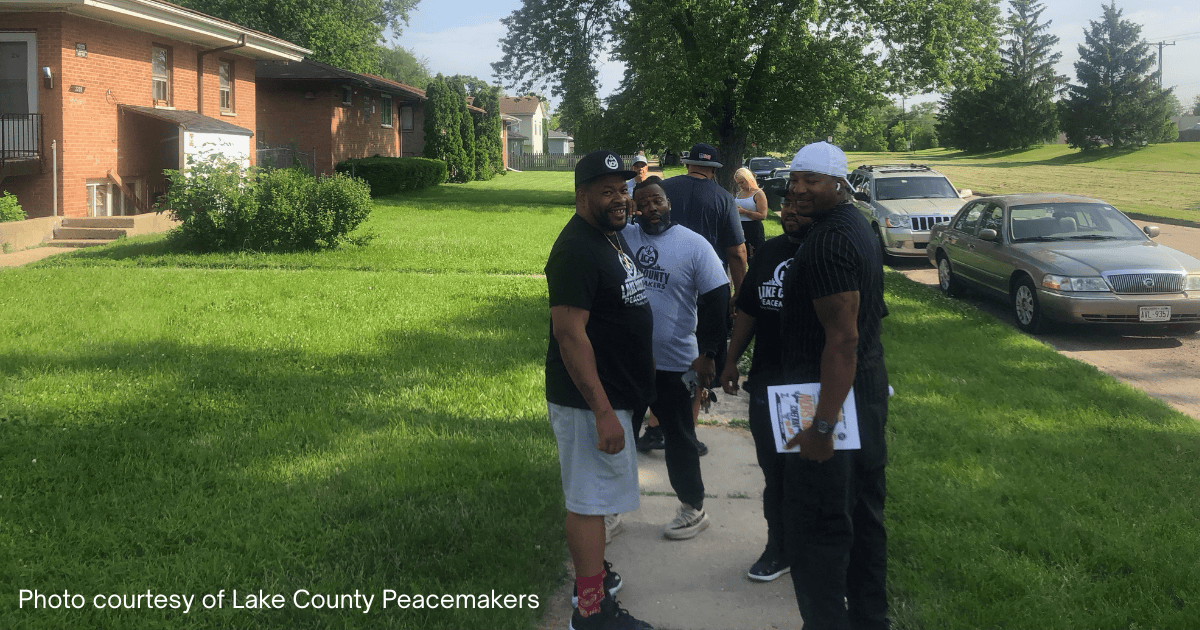
“We’re all from here,” Graves continued. “Being in a small community for over 40, 50 years, everybody knows us. And because we’re a smaller population, we can cover more territory.”
“We are not just a square little town,” says Ronald Edwards, another Lake County Peacemaker in the MPA. “Chicago is fast, but we have our own different type of violence.”
Still, the Lake County Peacemakers have made a significant impact on Lake County’s levels of violence, with an over 70% reduction in firearm-related homicides since the inception of the program and the Gun Violence Prevention Initiative in 2023.
The Lake County Peacemakers are now set to graduate in June along with their fellow MPA cohort members, but the cross-regional collaboration has already begun to create a ripple effect for Lake County’s violence prevention efforts.
“As someone who has gone through the Peace Academy, I valued the level of expertise, and the curriculum built around a shared understanding of what CVI is,” shared Lemon.
“Those trainings allowed me to create a vast network of superheroes throughout the city of Chicago,” she said. “I wanted [the Lake County Peacemakers] to also be able to create that, have that knowledge base, and network with people who are also boots-on-the-ground doing the same work.”
For the Lake County Peacemakers themselves, the experience at the MPA has been transformational.
“They wanted us to come to the MPA so we can execute our jobs more professionally and with more confidence; so we can heal ourselves and get a deeper training on how to work with our participants and ourselves,” Graves explained.
“If I could say anything, I would say the MPA has made me a better person overall,” she continues. “It opened my eyes to things I was blind to.”
With newfound clarity and bolstered confidence, Graves says she looks forward to collaborating with the “amazing” people she’s met in her cohort.
Edwards echoed her sentiments, saying the training will be integral for the continued success of the Lake County Peacemakers program. The training also gave him further insight into his past. “I didn’t know I was dealing with trauma, and that when I’m dealing with my participants, I’m taking on their trauma.”
Dr. Vanessa Perry DeReef, Chief Training Officer of the MPA, says this partnership is a phase in the Academy’s larger mission, which is to expand its model of CVI professionalism across the state and nationally.
“This allows us to collaborate regionally with other organizations and solidify that partnership. We will now be resources for one another,” said Dr. DeReef.
“This also allows our CVI workforce, [those who are] boots-on-the-ground, to have resources in different areas of our state. It’s a great collaboration because it allows the Academy to grow up and grow wide.”