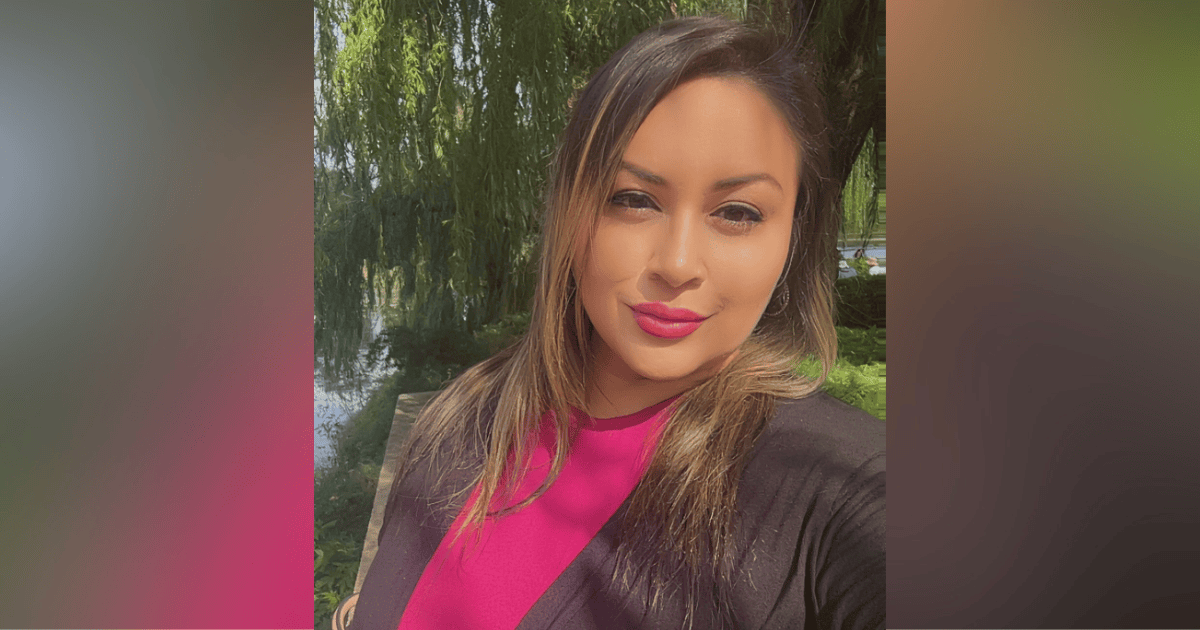
Karen Mata: A Voice for the Unheard in Pilsen and Little Village

Metropolitan Peace Initiatives is proud to celebrate the lives and work of women in Community Violence Intervention (CVI). Read more stories here.
Karen Mata, who works as a Street Outreach Mentor at New Life Centers, has a long history of providing safe havens for her community. Originally from Mexico and the child of immigrants, Mata moved to Little Village from Pilsen as a young woman, doing her best to get by after having a baby in her teens. She unintentionally became familiar with street outreach through her second partner.
“My house became the house for everybody that was hungry, that needed a place to sleep,” Mata recalls.
“Sometimes these guys are out there very late at night and they can’t make it back home, or their mothers or wives won’t let them,” she explains. “So they needed a place to stay. And me and my partner made our home a safe haven for everybody. That’s where I started learning, in a sense, street outreach.”
From providing a safe space for neighbors to land, to raising critical funds for friends whose family members have passed away due to gun violence, Mata was laying the foundation for her future. She says the experience played a defining role in shaping her into a fierce protector and provider for those in her community most vulnerable to violence.
“People would come to me for help with resources, and I was able to provide that, even though I didn’t have much at the time,” Mata shares. “And sometimes, just a listening ear makes a big difference for these guys. We see these guys out there, and they’re causing a ruckus, but they’re also humans with hearts.”
Mata eventually moved from Little Village to the suburbs, but felt the city was calling her back. She was introduced to New Life Centers by a friend who suggested she take a position as an Outreach Worker. That’s when she first attended a Light in the Night event as a volunteer. There, Mata saw her community sharing resources, food, and enjoying themselves, something she hadn’t seen in a long time.
“What was more beautiful was that the guys [who] usually cause damage in the communities were the ones giving back,” Mata says. “They were the ones giving out the plates. They were the ones helping with the community. And that moved me.”
She took the chance on the open role at New Life, and a year later, Mata now works alongside a team of Street Outreach Mentors. She completed her certification in Street Outreach through the Metropolitan Peace Academy (MPA), and is currently in the Case Management cohort. Next, she aims to finish all three signature programs with Victim Services. Mata considers this transformation to be a blessing, especially after her previous struggles.
“I was at some point hungry myself, with no money in my wallet, bouncing from house to house with my partner,” Mata explains. “You have to live through that experience to really know what it feels like. [In those situations,] people feel unseen, people feel unheard. I feel like I was given this role to be the voice for those people.”
Mata has a far-reaching impact on her community as a Street Outreach Mentor. She convenes peace circles between street organizations, responds to urgent situations at all hours, and provides immediate resources for families. She splits her time by running a youth group at an alternative high school for migrant students. The program is for students who have arrived in the United States within the last few years, and she helps them learn English and become familiar with the culture.
“This set of kids come in not speaking the language, not knowing the culture. They feel a lot more invisible than the rest,” Mata shares. “At some point, I was that little girl that didn’t know how to speak English, being raised by parents [who didn’t] know if they’re going to get deported. So [the program] is healing for me, too.”
As a mentor, Mata has a caseload of all women. She says the dynamics she witnessed while her home was a safe haven for the neighborhood are still present today.
“I see the struggles that these participants encounter and they were very similar to mine,” Mata shares. “These ladies are the backbones to their families. I feel like their struggles are more silent. Everybody pays attention to the guy that’s acting up, going in and out of jail, but they don’t pay attention to the girl that’s holding them down, who comes outside and asks the police not to take their husband.”
“They also have to raise the children,” she continues, noting that many just assume these women will just figure it out without realizing that they’re suffering in silence. “If their significant other ends up in jail, these girls are left with the financial burden, as well.”
Mata also runs a monthly brunch for women in New Life programs. It’s meant to be a safe space for women only. Together, they do arts and crafts, listen to music, and check in about their feelings and what they’re dealing with.
“Because we’re in survival mode, everybody just puts their feelings to the side,” she explains. “But this is a moment where I open up that space for these girls to be themselves, to feel their anger, their sadness, their happiness. This is a place for them to share it.”
Mata acknowledges that while Community Violence Intervention (CVI) is a male-dominated field, it’s a great feeling to be a woman in CVI.
“We grew up in a machista [sexist] setting, where even gangs were male-dominated,” Mata says. “So now being able to speak on the struggles of the unheard is huge,” Mata affirms.
“We’re not going to let you suffer. We’re going to figure this out.”