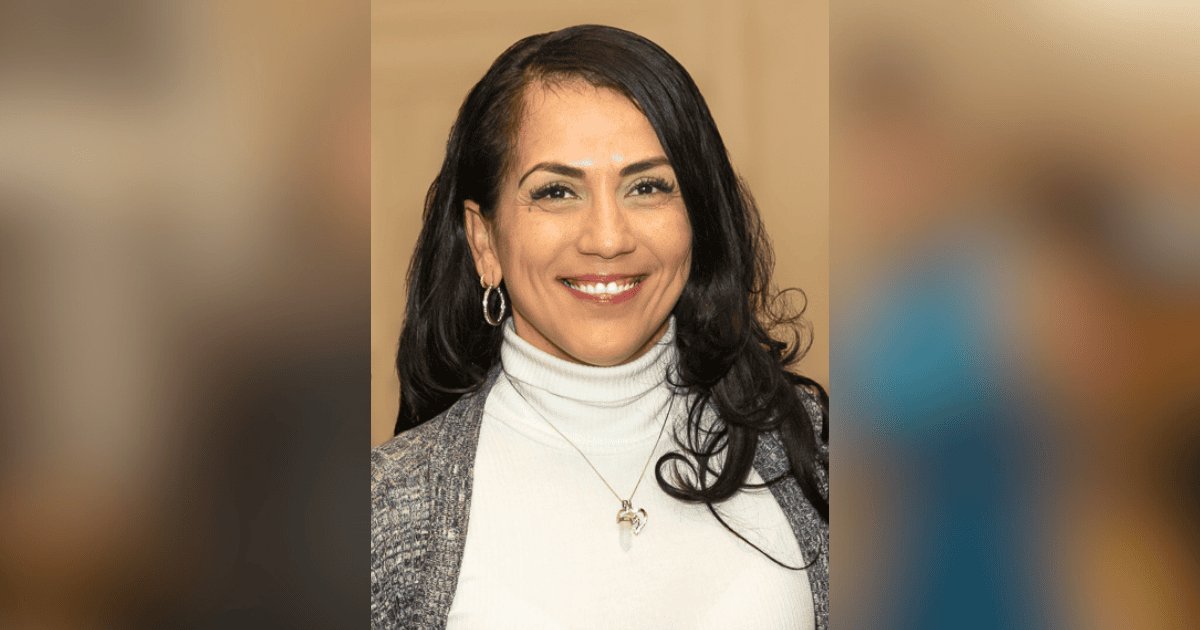
Enlace Case Manager Diana Hincapie Finds Healing and Purpose as a Credible Messenger of Community Violence Intervention

Metropolitan Peace Initiatives is proud to celebrate the lives and work of women in Community Violence Intervention (CVI). Read more stories here.
Community change happens in a thousand small but powerful ways and by people dedicated enough to make a difference. Whether they’re in the field as street outreach workers, one-on-one with participants as case managers, or by the sides of grieving families as victim advocates, credible messengers of Community Violence Intervention (CVI) heal community trauma.
That healing often extends to the lives of the credible messengers themselves. Diana Hincapie, Case Manager at Enlace Chicago in Little Village, is living proof of this, and says her work in the community has healed her relationship with herself, her family, and her city.
Hincapie came to Little Village with her mother at the age of six, leaving behind a large family in Colombia. She describes her early days in Chicago as a dark, lonely time.
“It was a drastic change of life for me: culture, food, weather, friends, family,” she explains. “I never even knew about snow, so it was a shock.”
While her mother struggled to make ends meet for her and her little sister, Hincapie turned to street life at an early age. The culture of street organizations was “scary” but heavily influential; by the age of 15, Hincapie was incarcerated. Hincapie explains the experience was traumatic but instrumental in her future path toward violence prevention.
“Going through that trauma helped me learn and connect with the language of our community, with the kids, the people,” she says. “I know the struggle. I know exactly what it feels like.”
“Going through that trauma helped me learn and connect with the language of our community, with the kids, the people. I know the struggle. I know exactly what it feels like.”
After being released in 2015, Hincapie was approached by staff at Enlace to consider becoming an outreach worker. She admits she was skeptical about going back to her neighborhood and wasn’t quite ready for the opportunity. She continued working several jobs to get by and provide for her daughter. But in 2020, Hincapie had a change of heart and decided to turn her experiences into action as an outreach worker at Enlace.
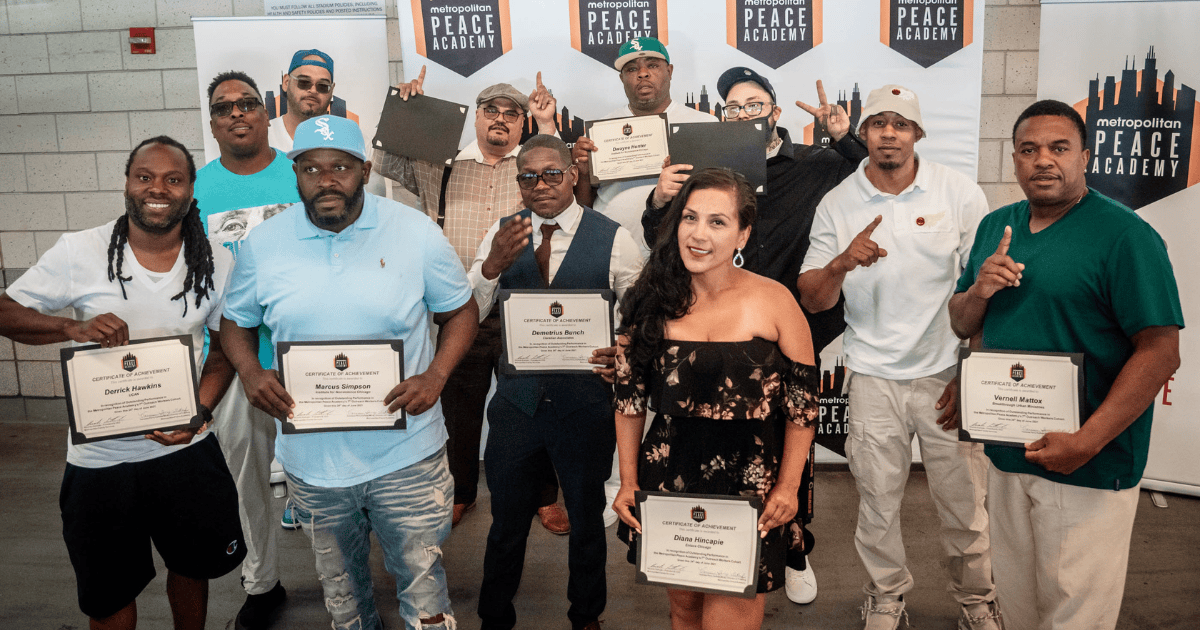
Hincapie sharpened her CVI expertise at the Metropolitan Peace Academy (MPA), Metropolitan Peace Initiatives’ (MPI) premier multi-disciplinary training program for CVI professionals. She completed all three programs: Outreach, Case Management, and Victim Advocacy. She was also a foundational part of the first Victim Advocate cohort in 2023, helping develop the curriculum’s pillars and collection of resources.
Hincapie says she wasn’t initially sure how her past experiences would help her as an agent of change in her community.
“I thought it wasn’t going to help me, but it helped me really connect with the people, what they go through, their testimonies, [and] how they feel,” she says, explaining that her past also makes her a more dedicated and empathetic provider to her participants. “Because I understand the struggle, we’re going to grind together to get you that license or into that GED program.”
Now, as a case manager, Hincapie maintains relationships with several participants, meeting with them one-on-one and becoming familiar with their specific needs, providing resources, and helping them achieve their goals. She says some of her participants call her “the hood counselor.”
She says her work as a mentor for community members has been incredibly gratifying, both professionally and personally.
“When people have the light in their eyes from accomplishing something, that is the best feeling ever, even if it’s the smallest thing,” she says. “I love to see that they found it and I was there to witness it.”
“When people have the light in their eyes from accomplishing something, that is the best feeling ever, even if it’s the smallest thing.”
Hincapie says she learns a great deal from her participants, and that her work has helped her become a more emotionally-responsive parent. “I need to put my daughter’s emotions first,” she explains, emphasizing the need to break cultural and familial cycles. “Especially in the Hispanic culture, we don’t talk about our feelings.”
Her personal favorite initiative, and the one that had the most personal emotional impact on Hincapie, was a program called “Moonstones,” developed with MPI Program Officer Rocio Vasquez. Together, they provided mental health resources, mentorship, and excursions to a group of teenage girls in Little Village. For Hincapie, this program had a powerful, unexpected impact.
“I connected with them,” she says. “Because I was locked up at such a young age, it was like my inner teenager was healing.”
That kind of healing, from the inside out, has a restorative ripple effect in the community, helping our neighborhoods grow from surviving to thriving.
“I think it does make a difference for the neighborhoods,” Hincapie emphasizes. “We’re still out there in the field, talking to the community, letting them know there’s a better life out there. Because trust me, I know there’s a better life out there.”
Read more Women in CVI stories here.