CVI Convening Celebrates Reduction in Citywide Gun Violence, Looks to the Future of CVI in Chicago
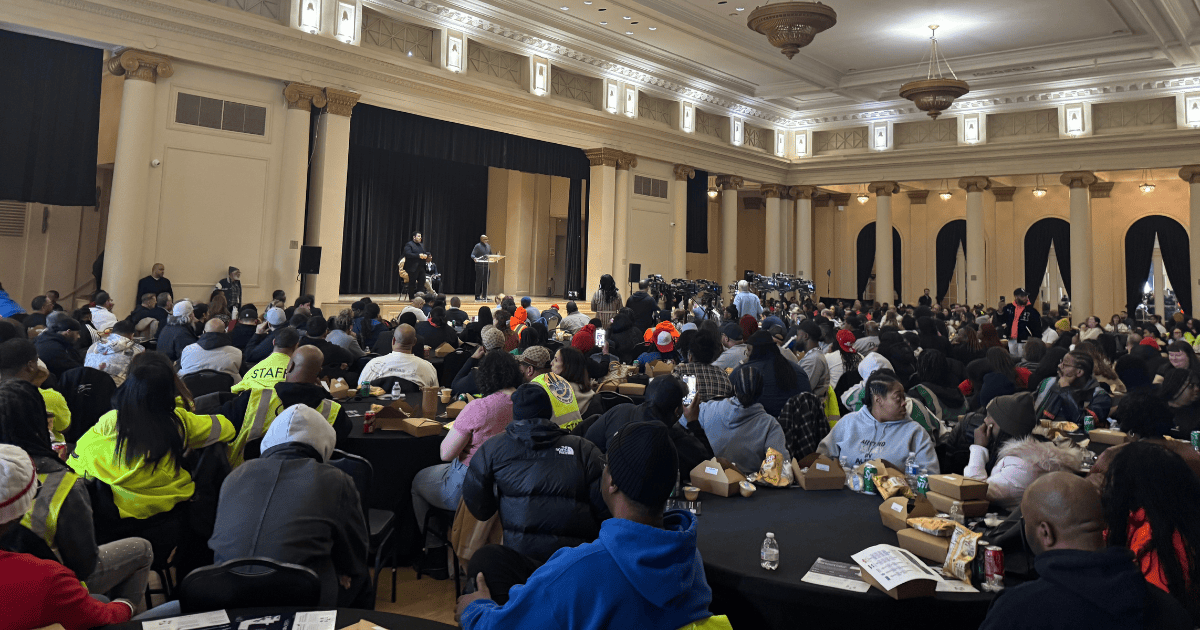
Today, Metropolitan Peace Initiatives (MPI), alongside other Community Violence Intervention (CVI) organizations, public officials, and advocates, convened to provide Chicago with a public safety update and mark the city’s historic decline in gun violence last year.
In 2025, Chicago recorded a nearly 30 percent drop from the year prior. The sharp decline in violence is the lowest the city has seen in 60 years. The milestone also marks four consecutive years of declining gun violence, something Chicago has not experienced in more than two decades.
Public officials like Cook County Commissioner Toni Preckwinkle and Mayor Brandon Johnson provided insight into how CVI was creating change at the local and county level.
“Our shared work reflects a simple belief, where you live should never determine whether you feel safe,” said Preckwinkle. “Community Violence Intervention has become a central part of how we advance that vision, not as a temporary initiative, but a long-term strategy.”
Mayor Johnson added, “CVI professionals are not just reducing violence, you’re strengthening our neighborhoods. You are helping drive economic development and building stability where instability once lived.”
The event served as an opportunity to reflect on the progress Chicago has made while reinforcing the importance of continued collaboration, investment, and community leadership.
“This historic decline in gun violence is the result of what happens when the entire city – CVI, law enforcement, philanthropy, business leaders, and so many others who believe every Chicagoan deserves to live in safety – commits to working together for peace,” added MPI Executive Director Vaughn Bryant.
Dr. Vanessa Perry DeReef, Chief Training Officer at the Metropolitan Peace Academy (MPA), emphasized the importance of professional development in the CVI ecosystem.
“The Metropolitan Peace Academy is Chicago’s training ground, where CVI frontline workers come to learn about best practices, techniques, and strategies surrounding their work,” asserted Dr. DeReef, “This is where case managers, outreach workers, and victim advocates come to sharpen their skills, strengthen their practice, and build community with one another.”
Since 2018, the MPA in Chicago has trained more than 700 CVI workers, helping strengthen the skills and capacity of those working directly in neighborhoods most affected by violence.
Former FLIP worker and MPA graduate James Mitchell shared his experience when entering the CVI ecosystem as a participant in 2018. “When I first started, it was hard. I didn’t even think there was anything wrong with what I did, the way I lived,” said Mitchell. “I spent my life contributing to the violence, I didn’t know how to keep it down. [Today], I’m living proof that if given the right chances, opportunities, and resources, people can change.”
After more than eight years working in CVI, Mitchell now serves as a Field Manager for the CP4P Crisis Prevention & Response Unit.
Additional speakers included Quiwana Bell, Assistant Secretary at the Illinois Department of Human Services Office of Firearm Prevention; Arne Duncan, Founder of Chicago CRED; and Esther Franco-Payne, Executive Director of the Partnership for Safe and Peaceful Communities.
Attendees also received an update on the Scaling Community Violence Intervention for a Safer Chicago (SC2) initiative, which is expanding coordinated violence prevention efforts across several neighborhoods, including North Lawndale, Austin, Humboldt Park, and Little Village. Additional communities are preparing to expand their violence intervention strategies as the initiative continues to grow.
The decline in arrests and drop in other forms of crime was also noted, an endorsement that prevention strategies, including trauma-informed support, employment opportunities, education, and mentorship for individuals and families most affected by violence are successful.
Watch the video recap below.