Community Violence Intervention Activation Training Informs Community Members on License-to-Operate, Neighborhood Engagement
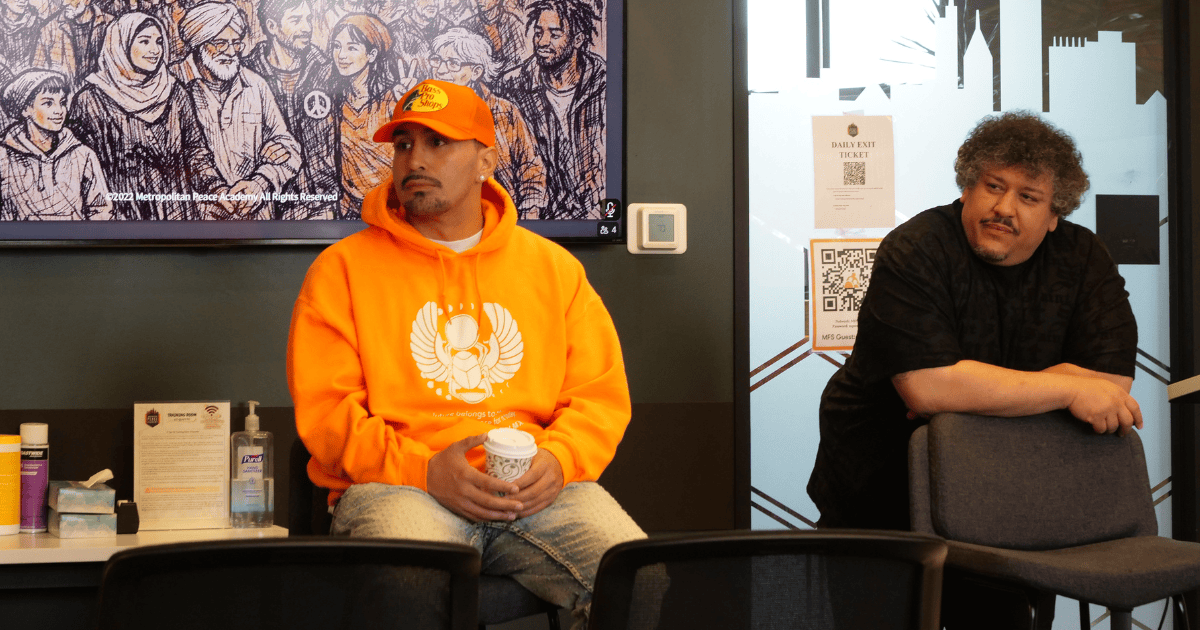
Leaders from Communities Partnering 4 Peace (CP4P) recently partnered with community-led collective “We Are Our Own Medicine” to host a Community Violence Intervention (CVI) Activation Training, bringing together community members from various organizations to learn about engaging local CVI groups and building relationships.
The session was led by Jesus Salazar, Senior Field Manager of Strategic Initiatives at Metropolitan Peace Initiatives (MPI); Daniel Malave, Outreach Worker at Southwest Organizing Project (SWOP); Damien Morris, Chief Program Manager of Violence Prevention at Breakthrough Urban Ministries; and Anthony Boyd, Program Manager at Project H.O.O.D.
Much of the conversation focused on how community stakeholders can strengthen their relationships with neighbors to better share resources with the goal of reducing violence.
One of the ways to demonstrate this, said Salazar, is to honor and validate people’s past experiences.
In speaking on trauma-informed care, he explained, “We’re dealing with a community that has trauma. People of color, Black and Brown, have been traumatized historically in this country since its inception. Being trauma-informed assures I don’t use language that will damage somebody walking in that door who has experienced trauma.
“We want to offer services to everyone. We don’t want to marginalize and demonize people even further.”
The training stressed the importance of hyperlocality in violence reduction. In practice, being hyperlocal often translates to having “LTO,” or license to operate, which is the credibility to connect with and serve community members based on historical ties and reputation.
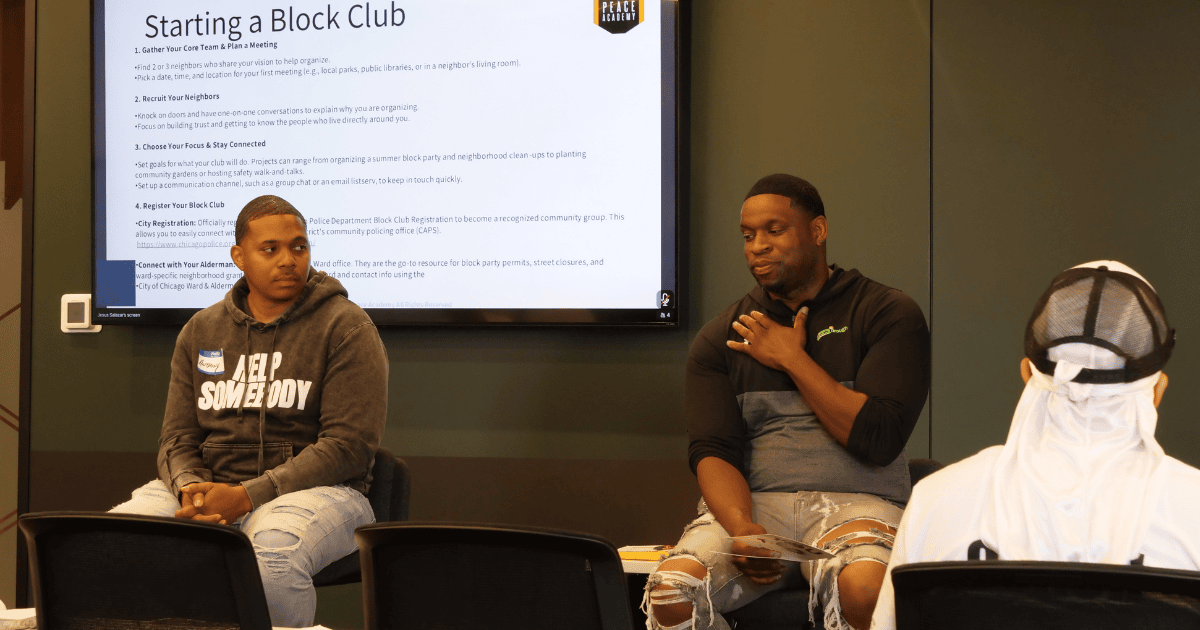
“[LTO means] having enough respect in the neighborhood that people will listen to you,” Boyd explained. “[LTO] gives me that reach for younger individuals where I can meet them where they are, and tell them about the consequences of violence and what the alternatives are. [They] respect my past, but my goal is to get [them] to respect what I’m doing right now.”
Kim Davis-Ambrose, training participant and Assistant Director of Community Engagement at the Justice Advisory Council (JAC), also shared insight on LTO and the value of cultural competence.
“In social work, we call it ‘person in environment [theory].’ You have to know and understand how people live and breathe,” she shared. “I get so many community members saying, ‘I just couldn’t connect with my therapist, they didn’t understand where I was coming from.’ If you have people trying to stop the violence that can relate, that’s hyperlocal.”
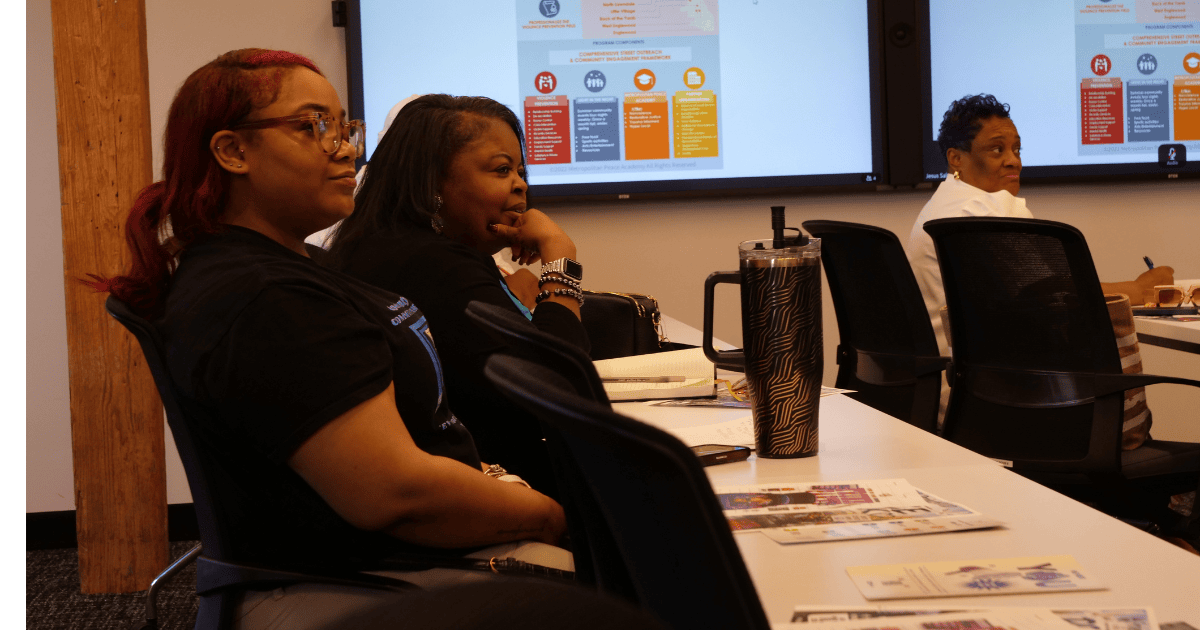
But LTO, Morris shared, isn’t the only part of community engagement.
“For those of you who don’t have a background, you still play an important role in violence reduction,” said Morris. “Even though you may not be from the streets, if you help [someone] get a job, they’re going to love you for life. So even if you don’t have that LTO, where can you fit in and contribute?”
Malave concluded by emphasizing the importance of collaborating across groups to maximize effectiveness.
“What’s most effective is when we have the mentality of the beloved community, having respect for one another,” he shared. “We’d be more effective coming up with solutions together. We’ve all got to take accountability. We can’t turn around and look at people like they’re bad. Before we pass judgment, we have to think what we can do to actually help them.”
Sirenzo Strong, Community Liaison at the JAC, shared a poignant but important sentiment to carry throughout community work: “There aren’t bad people. They all want to be good. They just got pulled [in another direction]. There might be no resources, but there’s no bad people.”