MPI Clinical Program Supervisor Maria Camacho: Relationships are the ‘Engine’ of Community Violence Intervention

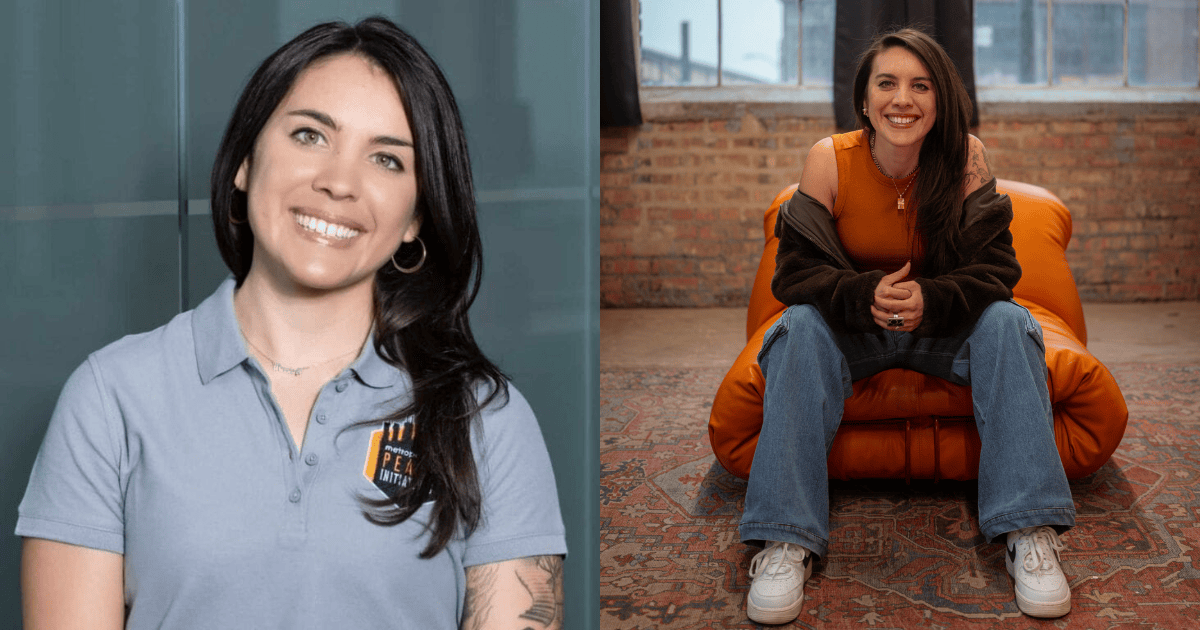
Maria Camacho, known affectionately as “Maki” by her colleagues, brings heart and wisdom to her role as a Bilingual Clinical Program Supervisor at Metropolitan Peace Initiatives (MPI). Born and raised in Bogotá, Colombia, her commitment to liberation and healing was sown early, and is an integral part of her family’s legacy.
“I come from a family that is very social justice oriented,” she said, calling out her grandfather Angel who serves as her inspiration. “He was such a huge advocate, and I saw the same spirit in my mom and dad. And so I grew up in that way. When we see an injustice, it’s so hard to just be quiet.”
Camacho immigrated to the United States at 15 years old, which is when she was also faced with the reality of how the Latinx (and more broadly communities of color) are treated in society. The injustice she and her family experienced weighed on her. It eventually became the compass guiding her toward becoming a victim advocate and clinical social worker at MPI. Starting as an interpreter for agencies like the Department of Children and Family Services, Camacho saw firsthand how vital advocacy and mental health support were for underrepresented communities.
Today, she brings her expertise and sensitivity to Communities Partnering 4 Peace (CP4P) partner organizations across the city of Chicago, which include New Life Centers, Precious Blood Ministry of Reconciliation (PBMR), Southwest Organizing Project (SWOP), and the Alliance of Local Service Organizations (ALSO).
Camacho also supervises a team of clinicians and provides one-on-one therapy, family counseling, and group support to those impacted by violence, many of whom are navigating the aftermath of trauma or reentering society after incarceration. She plays a key role in supporting a bilingual grief group for mothers who have lost children to violence.
“Grieving death due to violence is a beast. But in a way, you have the beauty of women being able to come together in a space that’s bilingual,” Camacho said. She recalls one moment in particular after the shooting death of an 8-year-old girl in Little Village. The group of mothers mobilized instantly, offering emotional support to the grieving family. “It gives you so much hope, and all I do is provide that space.”
“It really is a testament to the power of relationships and how relationships really move the work forward in Community Violence Intervention (CVI). That’s the engine of what makes it effective.”
As a woman in CVI, Camacho navigates multiple intersecting challenges; being a leader, a nurturer, and often a stand-in for familial roles. It’s emotionally intense work. “When you sit down with a mom and she describes to you the day that her son was shot and killed … that is not easy. I have no words. It’s just a beast of grief.”
But it’s not just the intensity of the work that Camacho faces.“Women have to put up with a lot and create very firm boundaries in a realm that is very male-dominated. So we also have to take care of each other and have each other’s back,” Camacho said. “Women in CVI have to be nurturing and tender, and fierce, and all of these things. And we have to face the misconceptions of women.”
However, Camacho believes strength and tenderness aren’t mutually exclusive. “I think as women, we think we need to be strong, always. But I can embrace the tender part of me, as well as the tough part. In CVI, you have to learn how to navigate it. You have to allow yourself to be vulnerable, but you also have to be careful where you are vulnerable.”
With this emotionally demanding work, Camacho sees a special role for women supporting women. She said you have to be a “girl’s girl” and cover one another. Still, she calls on men in the field to be better allies.
“We are side-by-side partners here,” she says. “I think men [should] teach other men to be sensitive, aware of the women in the room, and cut out some assumptions about women. And to check each other.”
Ultimately, Camacho hopes to continue interrupting cycles of violence and shifting trauma to healing and harmony. She admits the process is “imperfect, messy, sometimes really painful.” Still, Camacho has hope for the way forward for CVI in Chicago.
“I heard a rabbi once say, if you’re going to go through hell, don’t come out empty handed. Best believe, we’re gonna do this together and do it well.” She adds, “You gotta make it worth the sacrifice.”
Metropolitan Peace Initiatives is proud to celebrate the life and work of women in Community Violence Intervention (CVI). Read more stories here.